- Suboccipital release is sustained gentle pressure into the four small muscles at the base of the skull, the ones behind most skull-base tension and many headaches.
- You can do it at home with your fingers, two tennis balls in a sock, or a contoured foam tool, two to five minutes is a full session.
- The pressure should read as a good ache that eases, never sharp, electric or dizzying.
- It pairs best with heat before and gentle movement after, and it manages tension rather than curing its causes.
Suboccipital release is the single most useful hands-on technique we know for skull-base tension, and it’s the one physical therapists reach for when the top of your neck is running the show. The suboccipitals are four small muscles connecting the top two vertebrae to the skull; they fine-tune every head movement, they clench under stress and screens, and the occipital nerves thread directly through their territory, which is why they sit at the center of tension headaches, cervicogenic patterns and our own occipital neuralgia alike. Releasing them is simple, safe for most people, and learnable in an evening. Here is the technique, three ways, exactly as we use it.
What a release actually does
Sustained moderate pressure on a clenched muscle does two things. Mechanically, it reduces the resting tone: held long enough (thirty seconds and up), the tissue stops guarding against the pressure and lets go, which you feel as the ache melting under your fingers. Neurologically, it floods the area with non-pain input and dials down the sensitivity that keeps the region trigger-happy. For the suboccipitals specifically, less clench means less crowding of the occipital nerves passing through, which is why a good release can take the edge off nerve symptoms as well as muscle ache. What it does not do is fix the reason the muscles clench, the desk, the pillow, the stress, so treat it as the relief valve in a system whose pressure sources you are also addressing.
Why these four small muscles cause so much trouble
The suboccipitals are postural fine-tuners, not movers: their job is micro-adjusting the head’s position dozens of times a minute, and they are packed with position sensors that feed the balance system. Modern life abuses them in a specific way: hold a head slightly forward of the shoulders for hours (every screen, every phone) and these small muscles shorten and grip to keep the eyes level, all day, every day. Muscles built for constant tiny corrections end up doing constant heavy holding. That is why they are tender in nearly every desk worker who goes looking, why they respond so gratefully to sustained release, and why the release has to be paired with the posture changes that stop the daily re-clenching, the head position work in our desk guide being the other half of this exact conversation.
Finding the spot
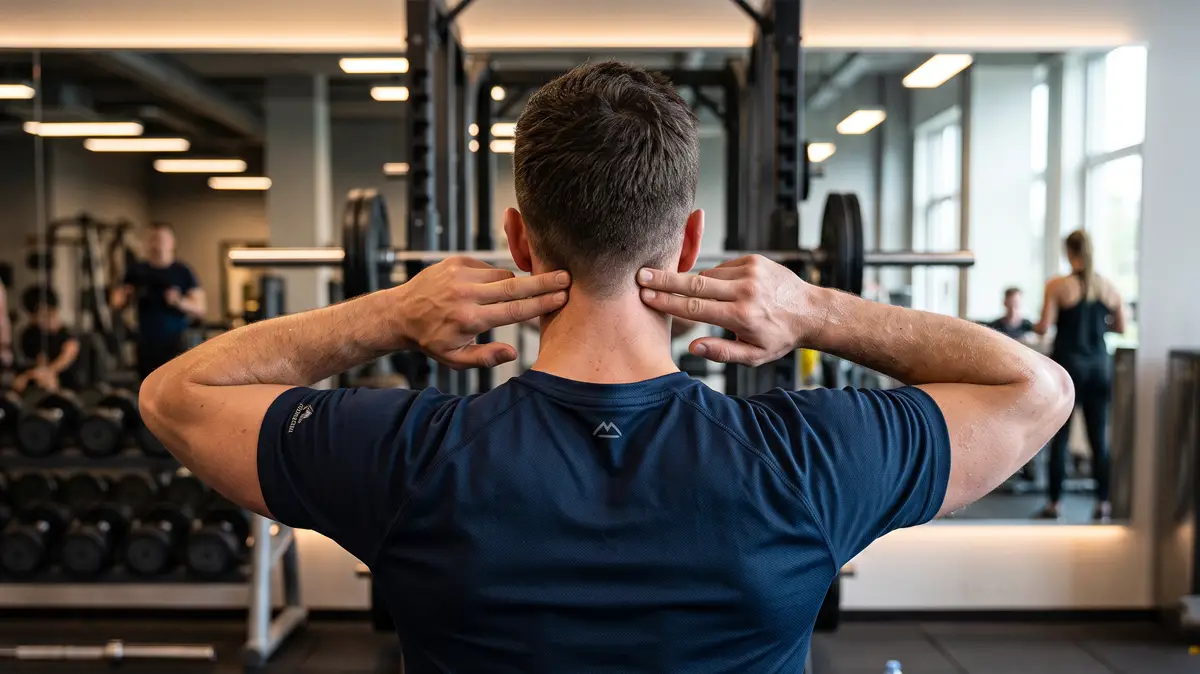
Run a thumb up the back of your neck until it meets the skull’s edge, then slide a finger-width outward from the midline on each side. Those two hollows just under the ridge of the skull, usually tender in anyone with desk habits, are the target. Stay in the muscle: on the midline you are on bone and ligament, and too far sideways you leave the neighborhood. Tenderness that reproduces your familiar ache means you are exactly where you should be; anything electric shooting up the scalp means ease off the pressure and shift slightly, you are pressing an irritated nerve rather than the muscle around it.
Method one: fingers (learn it this way first)

- Sit supported or lie on your back. Interlace your fingers behind your head and let the pads of both thumbs (or stacked fingertips) settle into the two hollows.
- Tip your chin down a fraction to open the space, then apply slow, steady pressure: aiming for a five-to-seven out of ten “good ache”, never sharp.
- Hold still. Thirty to sixty seconds per spot, breathing slowly, letting the head grow heavy into your hands. The ache should fade noticeably as the muscle releases.
- Add slow, tiny nods (yes-motion) under the pressure for a gentle active release once the initial ache eases.
- Work both sides, two or three spots each, two to five minutes total. More is not better; tissue responds to regularity, not heroics.
Method two: two tennis balls in a sock
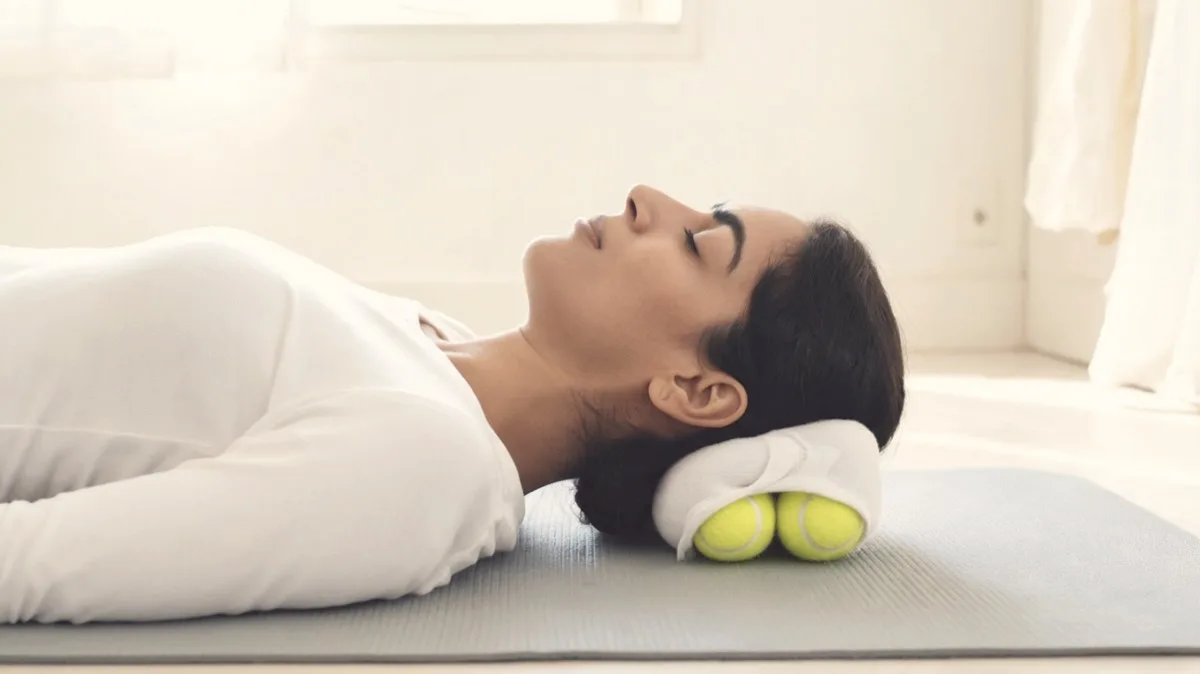
The classic physical therapy home hack, and the best zero-cost upgrade when your hands tire. Drop two tennis balls into a sock, knot it so they sit snugly side by side, and lie on your back with the pair nestled horizontally under the skull’s edge, one ball each side of the midline. Your head’s own weight supplies the pressure; the peanut shape keeps the spine itself untouched. Small slow nods and tiny head turns move the pressure around the territory. Two to five minutes, then off. If the pressure is too much, start on a bed rather than the floor; too little, the floor it is.
Method three: a contoured tool

Purpose-made suboccipital tools are essentially the tennis-ball trick with better ergonomics: a contoured cradle with two ridges that sit either side of the spine and press exactly where the thumbs go. The traction cradle we reviewed does double duty here, its ridges deliver a sustained release while the shape adds gentle decompression, one gadget for two jobs (the full review is here). Tools shine when hand strength is limited or when you want the release fully passive; fingers still win for precision on a specific knot. Our broader massage guide covers where each option fits.
 What we use
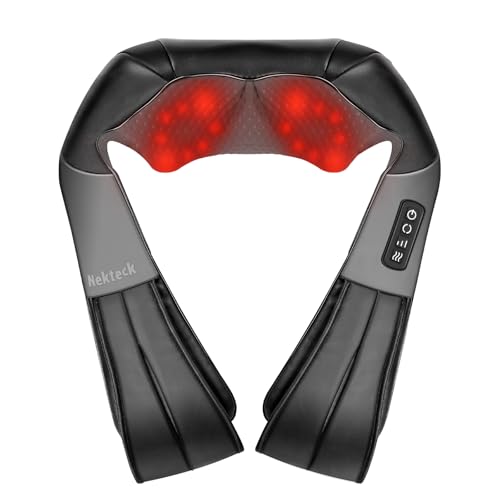
Nekteck Shiatsu Neck & Shoulder Massager with Heat
The contoured tool described above. The rotating nodes reach the suboccipital muscles more consistently than fingers manage, and the heat setting softens them first.
Check the Nekteck massager on AmazonAs an Amazon Associate we may earn from qualifying purchases, at no extra cost to you.
Making it work better
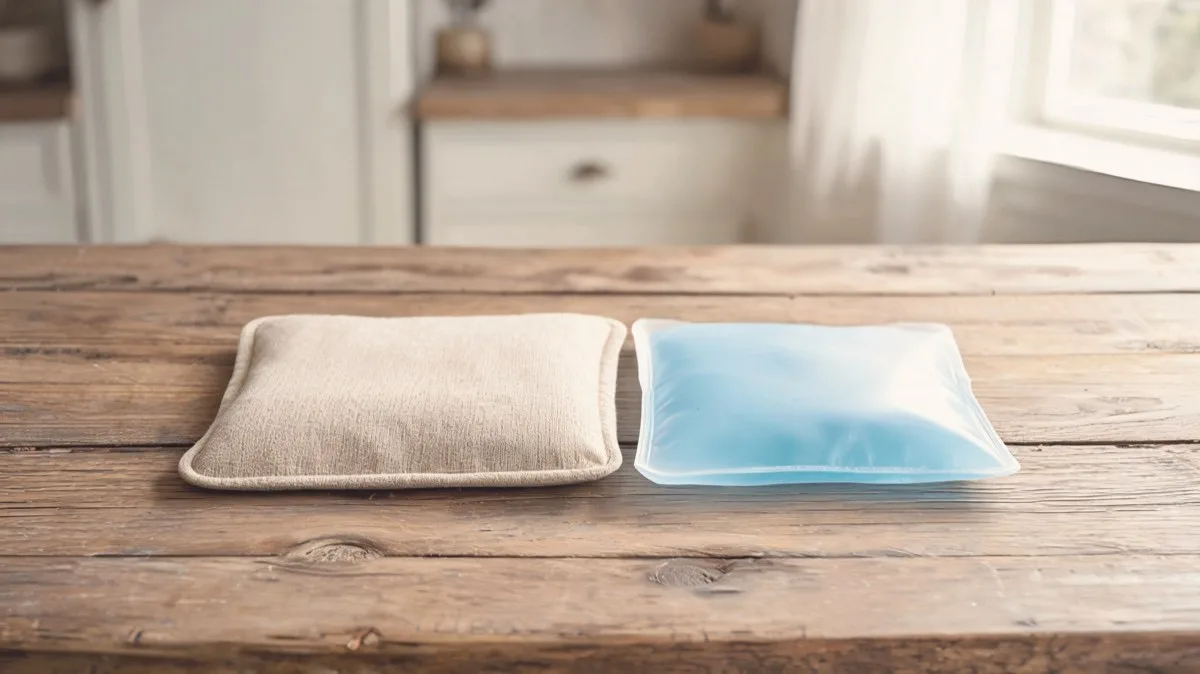
- Heat first. Ten to twenty minutes of a warm wrap beforehand softens the tissue and roughly doubles what a release achieves; the wrap guide has the tools.
- Move after. A minute of slow chin tucks and gentle head turns teaches the freshly released muscles their new range; our neck exercise guide has the full routine.
- Daily beats occasional. A two-minute evening release five days a week outperforms a twenty-minute assault on Sundays.
- Time it to your pattern: end of the desk day for tension-headache people, pre-bed for those whose flares love the pillow.
When not to, and when to stop
Skip self-release and ask a professional first if you have had recent neck trauma or surgery, have diagnosed instability, severe osteoporosis or rheumatoid involvement of the neck, or unexplained new symptoms. Stop any session that produces sharp pain, electric shooting sensations that persist, dizziness, nausea or visual changes; a release should only ever feel like a good ache easing. And mild next-day tenderness after your first sessions is normal in chronically tight tissue, but pain that worsens with each session is the tissue voting no, listen to it and get assessed.
Frequently asked questions
How long should I hold a suboccipital release?
Thirty to sixty seconds per spot, at a steady “good ache” pressure, letting the ache fade before moving on. A whole session is two to five minutes; consistency across the week matters far more than session length.
Can suboccipital release help headaches?
Yes, particularly tension-type and neck-driven headaches, because the suboccipitals are a primary generator of both. Many people feel the familiar head pain ease directly under the pressure, which is also a useful clue that the neck is the source.
Is it safe with occipital neuralgia?
Generally yes, with adjusted technique: gentler pressure, aimed at the muscles rather than the tender nerve points, and never into electric pain. On highly sensitive flare days, heat alone first and save the release for when the scalp settles.
Why does pressing the base of my skull feel so good?
Chronically overworked suboccipitals carry high resting tension, and sustained pressure both releases that tension and gives the nervous system competing input. The relief is real, and it’s also a message about how much load those muscles carry daily.
The health information in this guide is supported by the trusted medical sources below. It’s general information, not a diagnosis or medical advice. See our medical disclaimer.
Sources and further reading
Was this guide helpful?
Thank you. Your feedback helps us improve.