
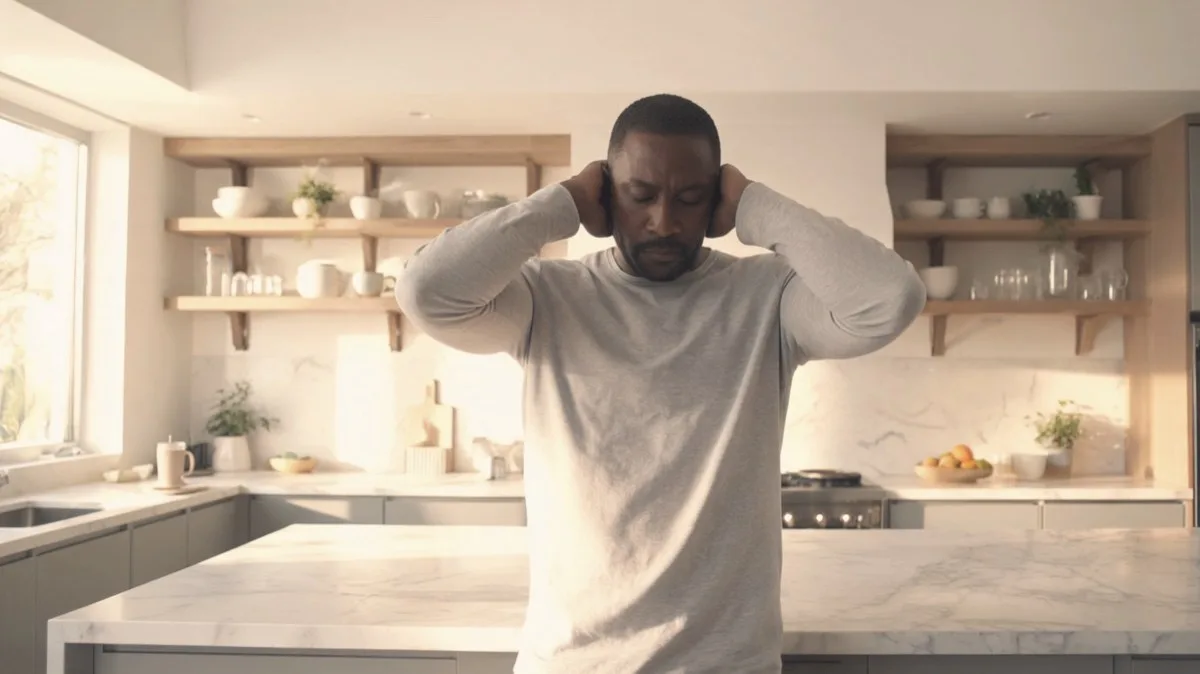
- A headache at the base of the skull usually starts in the neck: tight suboccipital muscles, irritated joints, or the occipital nerves themselves.
- The big three causes are tension-type headache, cervicogenic headache and occipital neuralgia, and they feel meaningfully different.
- Most respond to the same first-line care: heat, gentle mobility, posture changes and a pillow that supports the neck.
- Sudden, severe, or different-from-usual headaches are medical territory, not self-care territory.
A headache at the base of the skull has a short list of usual suspects, and after more than 25 years of living with one of them, we know the neighborhood well. The pain parked where your head meets your neck, sometimes gripping, sometimes throbbing, sometimes electric, almost always starts below the skull rather than inside it: in the small suboccipital muscles, the upper neck joints, or the occipital nerves that thread through both. This guide walks the three most common causes, how to tell them apart by feel, what genuinely helps tonight, and the signs that mean a doctor rather than a heat wrap.
Why a headache at the base of the skull picks this exact spot
The junction of skull and neck is the busiest, most delicate piece of engineering in the spine. Four small muscles (the suboccipitals) fine-tune every head movement; the top two vertebrae handle half your head’s rotation; and the greater and lesser occipital nerves pass from the spine up through those muscles to supply the back of the scalp. Everything modern life does to a head, hours tilted at screens, stress clenching, bad pillows, gets processed right here. When the muscles tighten, the joints grumble, or the nerves get squeezed, the pain plants its flag at the skull base, and sometimes sends runners up over the head.
Cause one: tension-type headache
The most common headache in the world often anchors at the skull base and upper neck. The signature: a dull, pressing, band-like ache, usually both sides, building through the day, worse with stress and desk hours, better with movement, heat and a proper break. The muscles under the skull are tender to the touch, but pressing them does not shoot pain up over the scalp. If this is your pattern, the playbook is well-established and we have written it up across our complete tension headache guide, from massage to long-term prevention.
Cause two: cervicogenic headache
Here the neck is not just involved, it’s the source: a problem in the upper cervical joints or soft tissue refers pain upward, typically one-sided, starting at the skull base and wrapping toward the temple or eye. The tells: it’s provoked by specific neck movements or sustained positions, your neck feels stiff on that side, and pressing the upper neck can reproduce the headache itself. It’s chronically underdiagnosed because the head steals the attention while the neck does the crime.
Cause three: occipital neuralgia
The one we know from the inside. When the occipital nerves themselves are irritated, the pain changes character: sharp, shooting, electric or stabbing jolts that start at the skull base and travel up the back of the head, often with scalp tenderness so pronounced that a hairbrush or pillow feels hostile. Between jolts there is usually a burning or aching baseline. If that description made you sit up, start with our complete guide and the symptom breakdown; telling it apart from its lookalikes is half the battle, and we cover the migraine question separately.
Telling them apart at a glance
| Feature | Tension-type | Cervicogenic | Occipital neuralgia |
|---|---|---|---|
| Character | Dull, pressing band | Deep ache wrapping forward | Sharp, electric jolts plus burning |
| Sides | Usually both | Usually one | One or both |
| Neck movement | Little effect | Provokes or worsens it | Certain positions trigger jolts |
| Scalp touch | Normal | Normal-ish | Often tender or electric |
| Typical driver | Stress, desk hours | Upper neck joints | Irritated occipital nerves |
When the causes overlap (they usually do)
Real necks rarely read the textbook. Long-term sufferers commonly carry elements of two or all three patterns: tight suboccipitals sensitize the region, cranky upper-neck joints refer their share, and an irritated occipital nerve turns the volume up on everything. This is why chasing a single perfect label at home matters less than people fear, and why the shared first-line care earns its keep across the board. Where the distinction really matters is when first-line care fails: cervicogenic patterns respond well to targeted physical therapy on the joints, while confirmed occipital neuralgia opens options like nerve blocks, which is a conversation for a clinician armed with your actual history.
Our practical suggestion, learned slowly: keep a one-line diary for two weeks. Time of day the pain starts, what the previous three hours involved, which side, what character (pressing, aching, electric), and what helped. That little dataset does two jobs: it usually reveals your dominant pattern and its triggers, and if you do end up in a consulting room, it makes the appointment ten times more productive than “my head hurts at the back” ever will.
The desk-day pattern, and breaking it
If your skull-base headache clocks in reliably between 3pm and 7pm on working days, you are looking at the most common presentation there is, and the most fixable. The sequence: hours of a slightly-too-low screen tip the head forward, the suboccipitals spend the afternoon hauling, and by evening the ache has graduated into a headache that follows you home. Breaking it needs pressure at both ends: the geometry fix (screen up, shoulders down, elbows supported) and the circulation fix (a genuine interruption every half hour). Add an afternoon heat session on bad days before the tightness consolidates, and the 5pm headache starts missing its appointments.
What helps tonight, whichever it is
The encouraging news: first-line care overlaps heavily, because all three share the same aggravators. Twenty minutes of moist heat hugging the skull base relaxes the suboccipitals whatever the diagnosis (our wrap guide covers the tools). Gentle sustained pressure into the hollows under the skull, the technique in our massage guide, eases all three patterns. Interrupt the desk posture that feeds it (the setup guide is the checklist), and give the night a fighting chance with a pillow that supports the neck’s curve instead of flexing it, which is the entire subject of our pillow guide. If mornings are when it bites, the loft guide is usually where the answer lives.
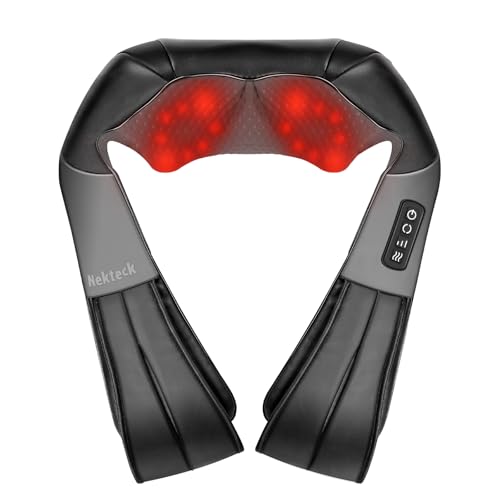 What we use
Nekteck Shiatsu Neck & Shoulder Massager with Heat
Aimed at the suboccipital muscles at the base of the skull, where all three of these headaches converge. Rotating nodes with a heat setting.
Check the Nekteck massager on AmazonAs an Amazon Associate we may earn from qualifying purchases, at no extra cost to you.
When it’s not self-care territory
Seek urgent medical care for a sudden, severe, worst-of-your-life headache; headache with fever and neck stiffness; headache after a head injury or fall; or headache with confusion, vision changes, weakness, numbness or trouble speaking. See a doctor soon, without the urgency, if your headaches are new and persistent, changing character, waking you from sleep, or simply not responding to the sensible measures above after a few weeks. Base-of-skull pain is usually mechanical and manageable; earning that reassurance properly is what assessment is for.
Frequently asked questions
What causes a headache at the base of the skull?
Most commonly: tension-type headache anchored in the suboccipital muscles, cervicogenic headache referred from the upper neck joints, or occipital neuralgia from irritated occipital nerves. Posture, stress, poor pillows and desk hours feed all three.
Why does the base of my skull hurt when I press it?
Tender suboccipital muscles are extremely common in desk workers and stress-carriers, and pressing them reproduces a familiar ache. If pressing triggers electric pain shooting up the scalp, that points more toward the occipital nerves and is worth reading about properly.
Can a pillow cause headaches at the base of the skull?
Yes, and it’s one of the most fixable causes: a pillow that holds the neck flexed, extended or tilted loads exactly these structures for seven hours. Morning-dominant skull-base headaches are the classic signature.
When should I worry about base-of-skull head pain?
Sudden and severe, with fever and stiff neck, after injury, or with neurological symptoms: urgent care now. New, persistent, changing or treatment-resistant patterns: book a normal appointment. Familiar, mechanical, posture-linked ache: self-care first is reasonable.
The health information in this guide is supported by the trusted medical sources below. It’s general information, not a diagnosis or medical advice. See our medical disclaimer.
Sources and further reading
Was this guide helpful?
Thank you. Your feedback helps us improve.