
- The first 24 hours of a sciatica flare reward calm movement, not bed rest and not pushing through.
- Short walks, position changes and gentle decompression positions beat lying still; ice early, heat later.
- Protect the two danger zones of the day: prolonged sitting and the night setup.
- Emergency signs (numbness in the saddle area, bladder or bowel changes, worsening leg weakness) mean immediate medical care, not home management.
A sciatica flare up rewards calm, structured action in its first day, and punishes both panic and stoicism. A sciatica flare-up announces itself without ambiguity: the deep ache or electric line from the buttock down the leg, and the sinking recognition that the next few days just changed shape. What you do in the first 24 hours genuinely influences how long the flare lasts, and the two instincts most people follow, going to bed, or grimly carrying on as if nothing happened, are both the wrong ones. Having lived alongside sciatica and back pain for years, this is the protocol we actually follow when the leg lights up, hour by hour, with the reasoning attached.
First: rule out the emergencies
Before any self-care, thirty seconds of honesty about symptoms. Seek immediate medical care (emergency care, not a routine appointment) if you have numbness or tingling in the saddle area (groin, inner thighs, around the buttocks), new difficulty controlling or emptying your bladder or bowels, sciatica in both legs at once, or leg weakness that is getting worse. These can signal serious nerve compression that has a treatment window. Also see a doctor promptly, though less urgently, if the flare follows real trauma, comes with fever, or you have a history that changes the stakes. None of those apply? Then the next 24 hours belong to you.
Hours 0 to 2: settle it, don’t fight it
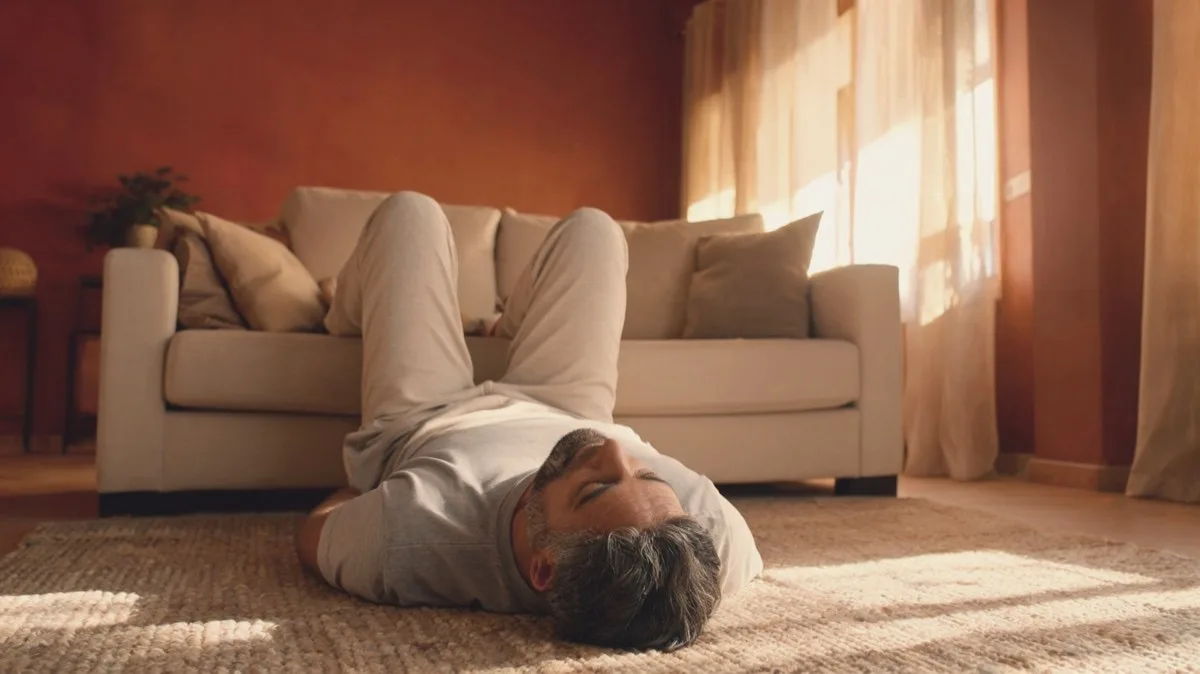
The opening move is to stop feeding the flare without shutting the machine down. Get out of whatever position lit the fuse, the chair, the awkward lift posture, the car seat, and spend the first hour alternating between two states: short, slow strolls around the house, and a genuine decompression position. The one we return to every time is lying on the back on the floor with calves resting up on a chair or sofa seat, knees and hips at right angles. It takes the compressive load off the lumbar spine and usually drops the alarm level a notch within minutes. Five to ten minutes there, then a gentle walk, then back. Movement is medicine here, but the dose makes the poison: strolling yes, errands no.
If your flare is the acute, just-happened kind, this is also the window where cold earns its keep: a wrapped ice pack on the lower back, ten to fifteen minutes. Early cold calms the initial inflammatory noise; heat gets its turn tomorrow.
Hours 2 to 12: protect the sitting
Sitting is where first-day flares go to get worse. Pressure concentrates directly on the sciatic territory, the lumbar spine rounds, and twenty minutes of a bad chair can undo two hours of careful management. If your day allows it, sit less and lie-or-stroll more. Where sitting is unavoidable, make it strategic: firm chair over soft sofa (sofas are the worst furniture in the house for sciatica), hips slightly higher than knees, feet planted, and a timer that stands you up every 20 to 30 minutes without negotiation. A contoured cushion with a tailbone cutout makes compliant sitting dramatically more tolerable; our seat cushion guide covers the one we would choose, and our guide to sitting with sciatica covers the technique side in depth.
Driving deserves its own mention: it combines the worst seat geometry with vibration and no position changes. If a journey can move to tomorrow, move it. If it cannot, break it deliberately: stop, get out, walk two minutes, every half hour.
Hours 12 to 24: win the night
The first night decides how day two feels, and it responds to preparation. Side sleeping with a pillow between the knees keeps the pelvis level and stops the top leg dragging the spine into rotation; back sleeping works with a pillow under the knees to soften the lumbar curve. The one position to refuse is stomach sleeping, which extends and twists the exact structures that are inflamed. We have written a full playbook in how to sleep with lower back pain and sciatica and the broader sleeping positions guide; the short version is: side, knee pillow, and a surface that does not hammock. If your mattress sags, the flare will find it, tonight is when many people discover their bed is part of their problem (a supportive mattress topper is the affordable fix; a structurally sagging mattress needs more than a topper).
Pain relief overnight: this is where over-the-counter options fit for many people, taken as the packet directs. We deliberately do not give medication advice beyond that; a pharmacist can tell you in two minutes what suits your health picture, and it’s genuinely worth asking rather than guessing.
What not to do in the first 24 hours
- Full bed rest. The most tempting and most counterproductive move. More than a day horizontal stiffens everything and is associated with slower recovery.
- Stretching aggressively into the pain. Day one is not the day for deep hamstring pulls or forcing the classic sciatica stretches. Gentle motion yes; yanking on an inflamed nerve, no. The exercise work starts as the acute edge settles.
- The sofa slump. Half-lying in soft furniture combines flexion, rotation and pressure: the complete trigger stack in one comfortable-looking package.
- Heavy lifting and twisting, obviously, including the laundry basket and the toddler pickup done sideways.
- Panic-Googling worst cases. Most sciatica flares, managed sensibly, ease substantially over days to a few weeks. Fear tightens muscles; muscles are half the problem.
The small sciatica flare up kit worth having ready
Every flare we have managed well had one thing in common: the tools were already in the house. Assembling a small kit on a good day costs little and changes the character of the bad ones. Ours holds four things: a gel cold pack in the freezer (day one), a microwavable heat wrap (day two onward, and the single most used item in the drawer), a knee pillow that lives on the bed so the side-sleeping setup is automatic rather than an act of midnight improvisation, and the seat cushion that makes the unavoidable sitting survivable. None of it’s exotic, all of it’s under the price of one physical therapy session combined, and the difference between reaching for a ready kit and rummaging for a bag of frozen peas at 11pm is larger than it sounds when your leg is singing.
 What we use
ComfiLife Gel Enhanced Seat Cushion
For the sitting problem in hours 2 to 12. A gel and memory foam wedge that takes the load off the exact point that hurts when you have to stay seated.
Check the ComfiLife cushion on AmazonAs an Amazon Associate we may earn from qualifying purchases, at no extra cost to you.
After the first day
From day two onward the strategy shifts from settling to rebuilding: heat starts to outperform ice as inflammation calms, walks lengthen, and gentle sciatic-friendly movement enters (our nine relief methods guide covers the progression). Keep the sitting rules and the night setup running all week, they are the two levers with the most influence over whether this is a three-day story or a three-week one. And if the flare is not clearly trending better after a couple of weeks, or keeps recurring, that is a pattern worth taking to a professional rather than managing forever.
Frequently asked questions
Should I rest or keep moving during a sciatica flare?
Keep gently moving. Short frequent walks and position changes consistently beat bed rest for recovery speed. The skill is dosing: strolling and decompression positions, not errands and workouts.
Ice or heat for a fresh sciatica flare?
Ice in the first day or so, wrapped, ten to fifteen minutes at a time, to calm the initial inflammation. Heat takes over from day two to relax guarded muscles. Both are supporting acts; movement and positioning are the leads.
How long does a sciatica flare-up last?
Managed sensibly, many flares ease substantially within days and most settle over a few weeks. Flares that plateau, worsen, or keep returning deserve professional assessment rather than indefinite self-management.
When is sciatica an emergency?
Numbness in the saddle area, new bladder or bowel problems, sciatica in both legs, or progressing leg weakness: these need emergency care immediately, because they can indicate serious compression with a limited treatment window.
The health information in this guide is supported by the trusted medical sources below. It’s general information, not a diagnosis or medical advice. See our medical disclaimer.
Sources and further reading
Was this guide helpful?
Thank you. Your feedback helps us improve.