

Gentle, targeted stretches are one of the most effective ways to relieve sciatica. They reduce pressure on the sciatic nerve, loosen the muscles that compress it, and restore the mobility that pain takes away. Just as importantly, they are something you can do yourself, at home, for free, and consistency with a few simple movements often does more than any single treatment. These six exercises are gentle enough for most people, but always move within a comfortable range.

Important: if any exercise significantly increases the pain shooting down your leg, or causes new numbness, stop and consult a professional. A gentle stretch in the back or buttock is fine; sharp radiating leg pain is a signal to ease off. If your sciatica followed an injury or is severe, get it assessed before starting.
The 6 Best Sciatica Stretches
1. Knee to Chest
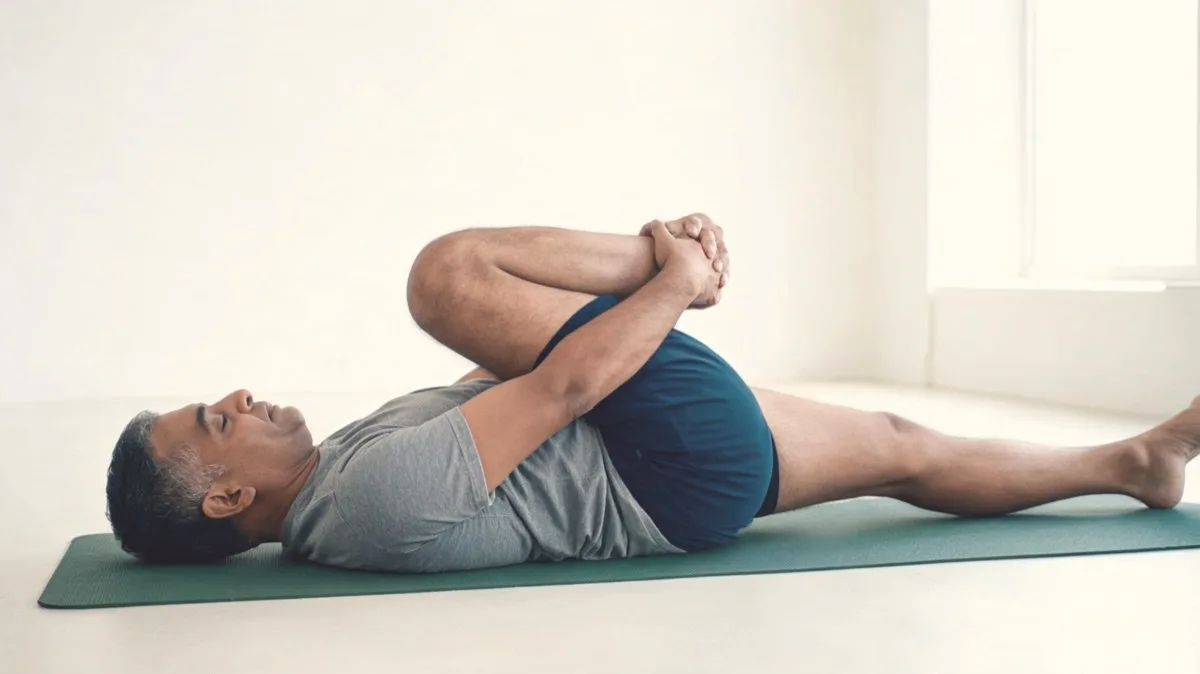
Lie on your back. Gently draw one knee up toward your chest, holding behind the thigh, until you feel a stretch in the lower back and buttock. Hold 20 to 30 seconds, then switch legs. Repeat 2 to 3 times each side. This eases tension in the lower back and gently mobilizes the area.
2. Figure-Four Stretch
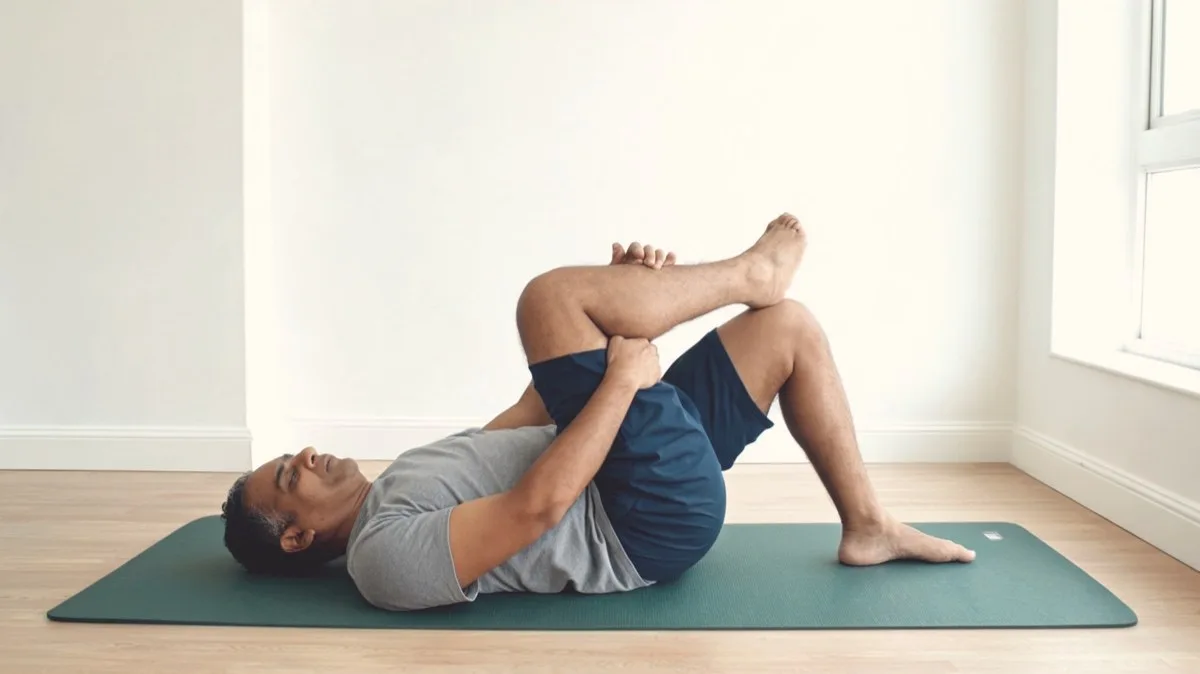
Lie on your back with knees bent. Cross one ankle over the opposite knee, then gently pull the supporting thigh toward you. You will feel a stretch deep in the buttock, the piriformis muscle, which often compresses the sciatic nerve. Hold 20 to 30 seconds each side. This is one of the most effective stretches for piriformis-related sciatica.
3. Knee to Opposite Shoulder
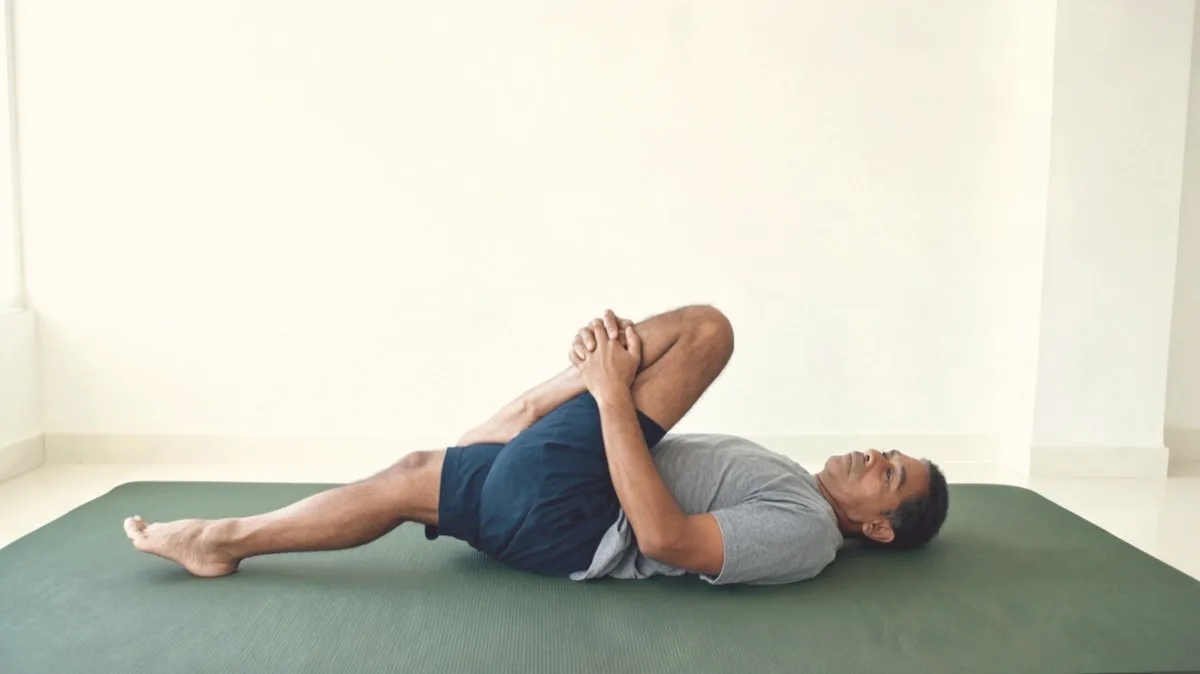
Lying on your back, draw one knee across your body toward the opposite shoulder until you feel a gentle stretch. Hold 20 to 30 seconds each side. This targets the buttock and outer hip from a slightly different angle.
4. Standing Hamstring Stretch
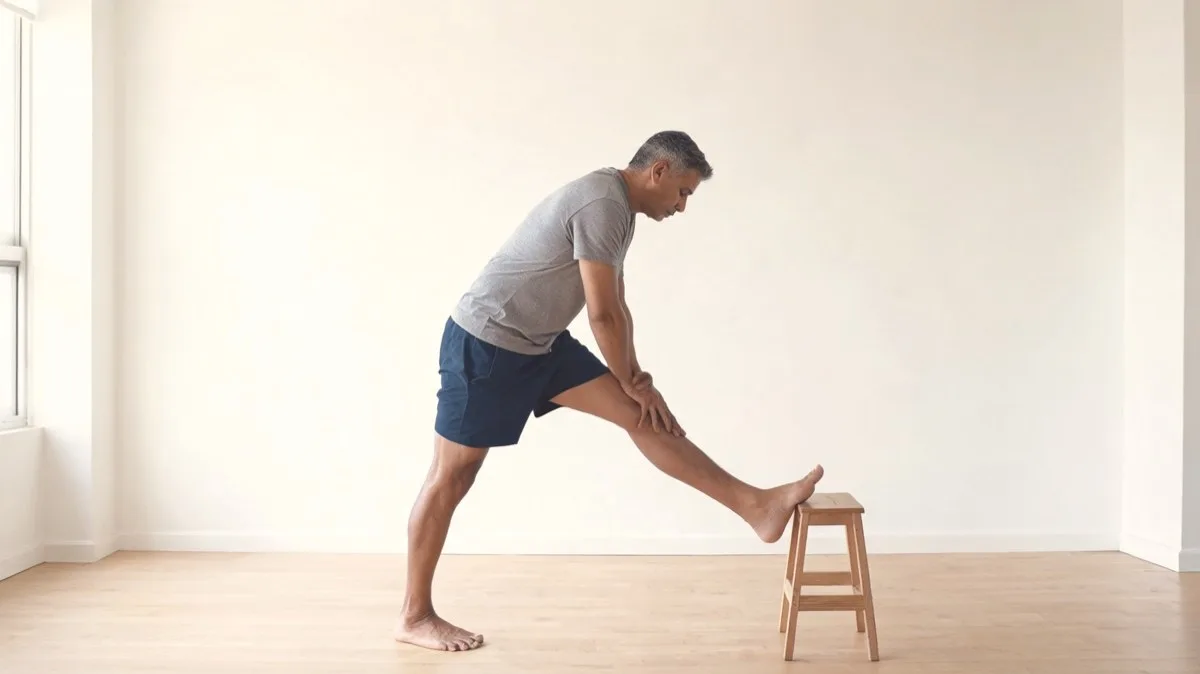
Place one heel on a low step, keeping the leg straight, and gently lean forward from the hips. Tight hamstrings increase sciatic tension, so keeping them loose helps. Hold 20 to 30 seconds each side, and avoid rounding your back.
5. Cobra / Press-Up
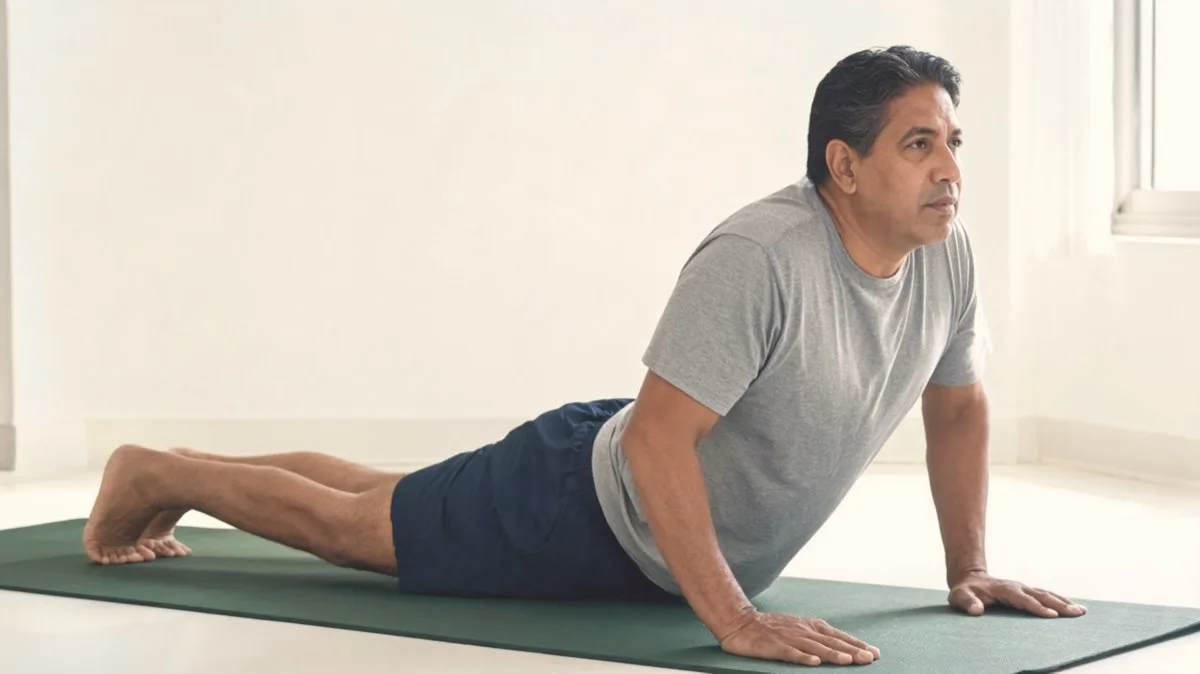
Lie on your front and gently press up onto your forearms or hands, extending the lower back. For disc-related sciatica, this gentle extension can help “centralize” the pain (move it out of the leg and back toward the spine, which is a good sign). Hold 10 seconds, repeat several times, and stop if it increases leg pain.
6. Pelvic Tilt
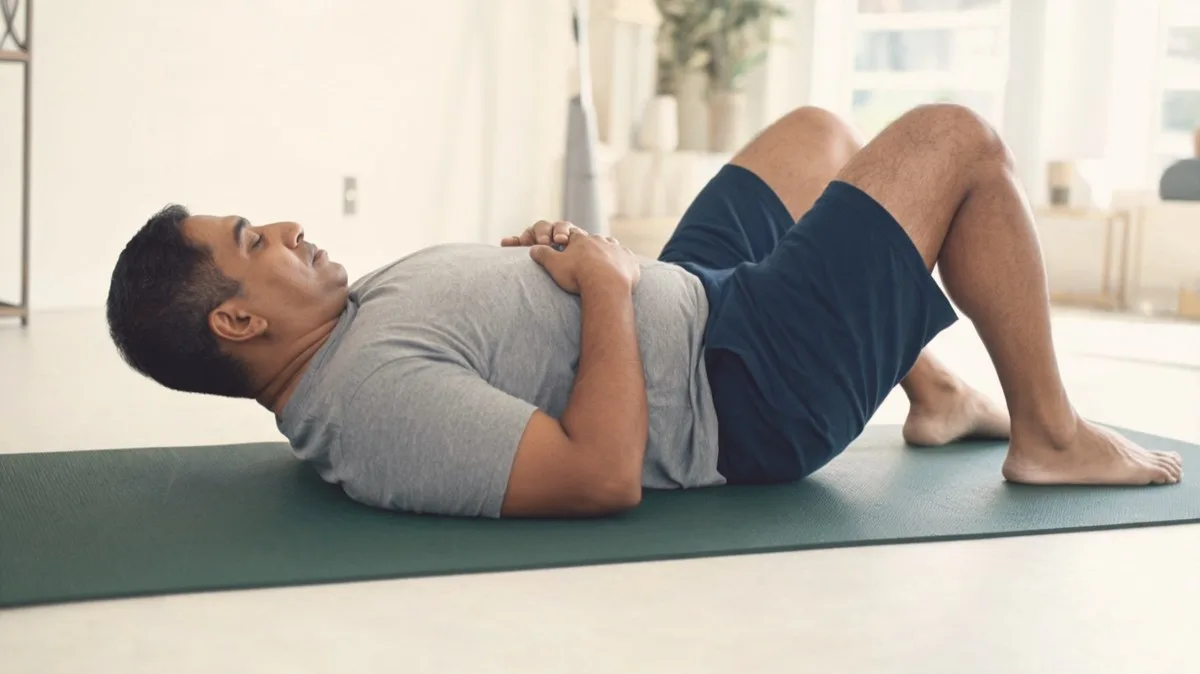
Lie on your back with knees bent. Gently flatten your lower back against the floor by tightening your abdominal muscles, then release. Repeat 10 to 15 times. This gently mobilizes the lower spine and begins to engage the core muscles that support it.
How Often to Do These
Once or twice daily is ideal during a flare-up, easing back as you improve. Gentle consistency beats intensity every time, a calm daily routine will do far more than an occasional aggressive session, which can aggravate the nerve. Warm up with a short walk or some heat first, and move slowly throughout.
Combine With the Bigger Picture
Stretching works best alongside the other fundamentals: gentle activity rather than bed rest, good sitting posture, supportive sleep positioning, and the broader advice in how to relieve sciatica pain and our complete guide to sciatica.
Frequently Asked Questions
Can stretching make sciatica worse?
Gentle stretching usually helps, but overstretching or forcing a movement can aggravate the nerve. Move slowly, stay within comfort, and stop if leg pain or numbness increases.
How quickly do sciatica exercises work?
Some people feel relief immediately after stretching; lasting improvement usually comes over two to six weeks of consistent practice alongside other measures.
What is the best exercise for sciatica?
The figure-four stretch is one of the most effective, because it releases the piriformis muscle that commonly compresses the sciatic nerve. The knee-to-chest stretch is a gentle all-rounder.
Should I exercise during a sciatica flare-up?
Gentle movement is usually better than complete rest, but keep it very gentle during a severe flare and avoid anything that sharpens the leg pain. Build up as the flare settles.
The information on this site is based on personal experience and research. It’s not medical advice. Always consult a qualified healthcare professional for diagnosis and treatment.
When to seek medical help
See a doctor if sciatica or back pain does not improve after a few weeks or keeps worsening. Seek urgent care (call 911 or go to your nearest emergency room) for numbness around the genitals or buttocks, trouble urinating, or loss of bladder or bowel control.
This guide combines personal experience of living with sciatica and back pain with guidance from the medical sources below. It’s general information, not a diagnosis or medical advice. See our medical disclaimer.
Sources and further reading
Was this guide helpful?
Thank you. Your feedback helps us improve.