
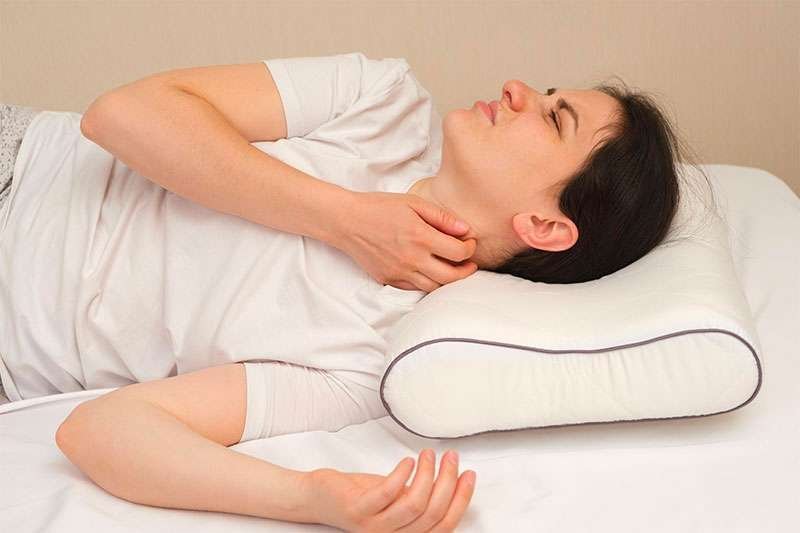
The short answer: the best pillow for neck pain is the one that keeps your head level with your spine all night, in the position you actually sleep in. For most people that’s a medium-firm cervical contour pillow made from memory foam or latex. Match the height to how you sleep: medium on your back, higher and firmer on your side, thin or none on your stomach. The pillow we recommend on this page is the Osteo Cervical Pillow, a contour memory-foam pillow whose height adjusts to your build.
- A pillow has one job: keep your head level with your spine, neither propped up nor dropped down.
- How you sleep sets the height. Roughly 4 to 6 inches on your side, 3 to 5 on your back, very little or none on your stomach, measured squashed under your head.
- A cervical contour or adjustable memory-foam pillow suits most neck pain. Soft down gives too little support.
- Replace any pillow that no longer springs back into shape. Most lose their support within one to two years.
We’ve lived with neck pain for over 25 years, and the pillow was the single biggest change we made. The wrong one quietly undid everything else: the stretches, the posture work, the massage. So every pick here is judged the way we judge our own. Does it hold the neck in line all night, and does it still do it months later?
Most people check the pillow last. It’s worth checking first. A pillow that’s too high, too flat or too soft holds your neck out of line for hours, and it’s one of the most common reasons people wake with a stiff, painful neck. The right one is one of the cheapest fixes there is. This guide works from how you sleep, because that decides almost everything else.
On this page
- Top pick for neck pain at a glance
- Which pillow for your sleeping position
- What a good pillow for neck pain actually does
- How to choose a pillow for your sleeping position
- Memory foam, latex, buckwheat or down
- What to look for in a pillow for neck pain
- When to replace your pillow
- Pillows for occipital neuralgia and neck headaches
- Frequently asked questions
Top pick for neck pain at a glance
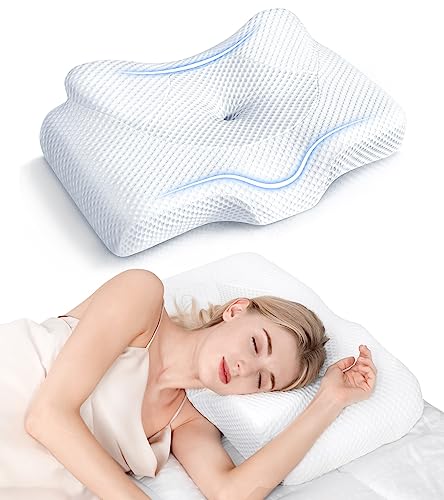
Osteo Cervical Pillow
A memory-foam contour pillow with a hollow center that cradles the head and keeps the cervical spine in neutral alignment. It comes with a cooling case, and the height adjusts, so you can tune it to your own build rather than hoping one shape fits.
Check the Osteo pillow on AmazonAs an Amazon Associate we may earn from qualifying purchases, at no extra cost to you.
✔ Pros
- Great contour support
- Cooling cover
- Height adjusts to suit you
✖ Cons
- Firmer than a soft, plush pillow
- The contour shape takes a few nights to get used to
Which pillow for your sleeping position
Find the way you usually fall asleep, then read across.
| How you sleep | Height to aim for | Pillow type | Read next |
|---|---|---|---|
| On your back | Medium, roughly 3 to 5 inches | Cervical contour or memory foam, with support under the curve of the neck | Best sleeping positions for neck pain |
| On your side | Higher and firm, roughly 4 to 6 inches, more for broad shoulders | Contour or adjustable fill | Best pillows for side sleepers with neck pain |
| On your stomach | Very thin, or none | The thinnest pillow you can find, while you move toward side or back sleeping | How to change your sleeping position |
| A mix of positions | Tune it for your main position | Adjustable fill handles the compromise best | How high should your pillow be |
| You have occipital neuralgia | Back first, head level with the spine | A cervical contour that takes pressure off the base of the skull | Best pillow for occipital neuralgia |
Not sure your height is right? Lie on your side and have someone photograph you from behind. The line from the base of your skull down your spine should be straight. A head tilting down means you need more height. A head propped up means less. The full method, with measurements, is in how high should your pillow be.
What a good pillow for neck pain actually does
The job of a good pillow is simple to state and surprisingly hard to get right: keep your head and neck in neutral alignment, the same gentle curve your spine holds when you stand with good posture. If your head is pushed up, dropped back, or tilted sideways through the night, the muscles, ligaments and joints of the neck are loaded for hours, and you wake stiff and sore. A good pillow removes that load. Everything below is in service of that one goal.
How to choose a pillow for your sleeping position
How you sleep is the single biggest factor in which pillow you need.
If you sleep on your back
You need medium loft that supports the natural curve of the neck without pushing your head forward. A contoured cervical pillow with a raised neck section works especially well. Avoid thick, fluffy pillows that tilt your chin toward your chest. A pillow under your knees makes the position easier to hold all night.
If you sleep on your side
You need higher, firmer loft to fill the wider gap between your head and the mattress created by your shoulder, so your head stays level with your spine. Too low and your head drops toward the mattress all night. Pull the pillow’s edge down to meet the top of your shoulder, so your neck is supported along its whole length. See our dedicated guide to the best pillows for side sleepers with neck pain.
If you sleep on your stomach
This is the hardest position for the neck because it forces rotation for hours. If you can’t break the habit, use the thinnest pillow possible, or none, to reduce the strain, and work gradually toward back or side sleeping. A body pillow hugged along your front makes the switch easier, and it takes weeks, not nights. Our guide to the best sleeping positions for neck pain walks through it.
Memory foam, latex, buckwheat or down: which fill is best for neck pain
- Memory foam: excellent contouring and support, holds its shape, the best all-round choice for neck pain. Choose higher-density foam and a cooling cover if you sleep warm. See best memory foam pillows for neck pain.
- Latex: supportive and responsive, cooler and more durable than memory foam, naturally hypoallergenic.
- Buckwheat: very firm and fully adjustable. Add or remove hulls to dial in the loft exactly, though it’s heavy and can be noisy.
- Down or feather: soft and luxurious but offers little structural support, so it’s generally a poor choice for neck pain.
Not sure between a shaped pillow and a foam one? We settle it in cervical pillow vs memory foam pillow. The short version: “cervical” is a shape, “memory foam” is a material, and a cervical-contour pillow made from memory foam gives you both.
What to look for in a pillow for neck pain
- A contoured or cervical design for genuine neck support rather than just head cushioning.
- Adjustable loft so you can fine-tune the height to your body and position.
- A breathable, cooling cover to stop heat building up and disturbing sleep. Don’t trade support for cooling, though. You need both. More in best cooling pillows.
- Hypoallergenic materials if allergies are a factor.
- A removable, washable cover for hygiene over the pillow’s life.
When to replace your pillow, and signs it’s the problem
Most pillows lose their supportive structure within one to two years. A quality memory foam or latex cervical pillow lasts longer, but the test is simple: if it no longer springs back into shape, or you wake with neck pain that eases as the day goes on, it has stopped doing its job. Replacing a worn-out pillow is often the cheapest fix for stubborn morning neck pain.
Signs your pillow is the wrong height:
- You wake stiff, or with a headache at the base of the skull, that eases through the morning. Usually too low, or a pillow that has collapsed.
- You fold an arm under the pillow in the night. Your body is making up the missing height.
- You wake with the pillow doubled over or stacked. Too low, again.
- Your jaw is tense or an ear is numb after a night on your side. Often too high.
- You sleep better away from home on a different pillow. Your pillow is the variable, not your neck.
If mornings are the worst part, our guides to morning neck stiffness and severe neck pain after sleeping run through the rest of the checklist.
Pillows for occipital neuralgia and headaches from the neck
If your pain is linked to occipital neuralgia, the requirements are slightly more specific. The pillow must take pressure off the base of the skull, so see our dedicated guide to the best pillow for occipital neuralgia. The pillow we have slept on every night for over 10 years is the Therapeutica, and our Therapeutica pillow review covers why it helps, the adjustment period, and who should skip it.
If your headaches start in your neck, the same rules apply with one turned up: the pillow has to hold its shape all night, because one that collapses at 3am loads the upper neck exactly where it hurts. That’s covered in how to sleep with cervicogenic headache.
For background on neck pain itself, see what is cervicalgia, and pair the right pillow with daily neck exercises for the best results.
Frequently asked questions
What type of pillow is best for neck pain?
For most people, a medium-firm cervical contour pillow made from memory foam or latex. It supports the neck’s natural curve and keeps the spine neutral, which is what relieves and prevents neck pain.
How high should a pillow be for neck pain?
High enough that your head lies level with your spine, and no higher. That’s roughly 4 to 6 inches, squashed under your head, if you sleep on your side, 3 to 5 on your back, and very little or none on your stomach. A soft mattress you sink into lowers the number.
Is it better to sleep without a pillow for neck pain?
Only if you sleep on your stomach, where less height means less strain. On your back or side, no pillow lets your head drop below the line of your spine and loads your neck all night. The goal is the right height, not no height.
How often should I replace my pillow?
Every one to two years for most pillows. If it no longer holds its shape or you wake with neck pain, replace it sooner.
Are expensive pillows worth it for neck pain?
Often yes, because the price usually reflects better materials and engineering. A well-made cervical pillow that keeps your spine aligned for years is one of the better-value investments for chronic neck pain.
Can the wrong pillow cause neck pain?
Absolutely. A pillow that is too high, too flat or too soft holds the neck out of alignment for hours, and is one of the most common causes of waking up with a stiff, painful neck.
The information on this site is based on personal experience and research. It’s not medical advice. Always consult a qualified healthcare professional for diagnosis and treatment.
Ready to try the Osteo Cervical Pillow?
Check the latest price and availability on Amazon.
Check the Osteo pillow on AmazonRelated reading
- How high should your pillow be
- The best sleeping positions for neck pain
- Severe neck pain after sleeping
- How to stop neck pain
- Easing morning neck stiffness
- What is cervicalgia
- Our full back and neck pain roundup
The health information in this review is supported by the trusted medical sources below. It’s general information, not a diagnosis or medical advice. See our medical disclaimer.
Sources and further reading
Was this guide helpful?
Thank you. Your feedback helps us improve.