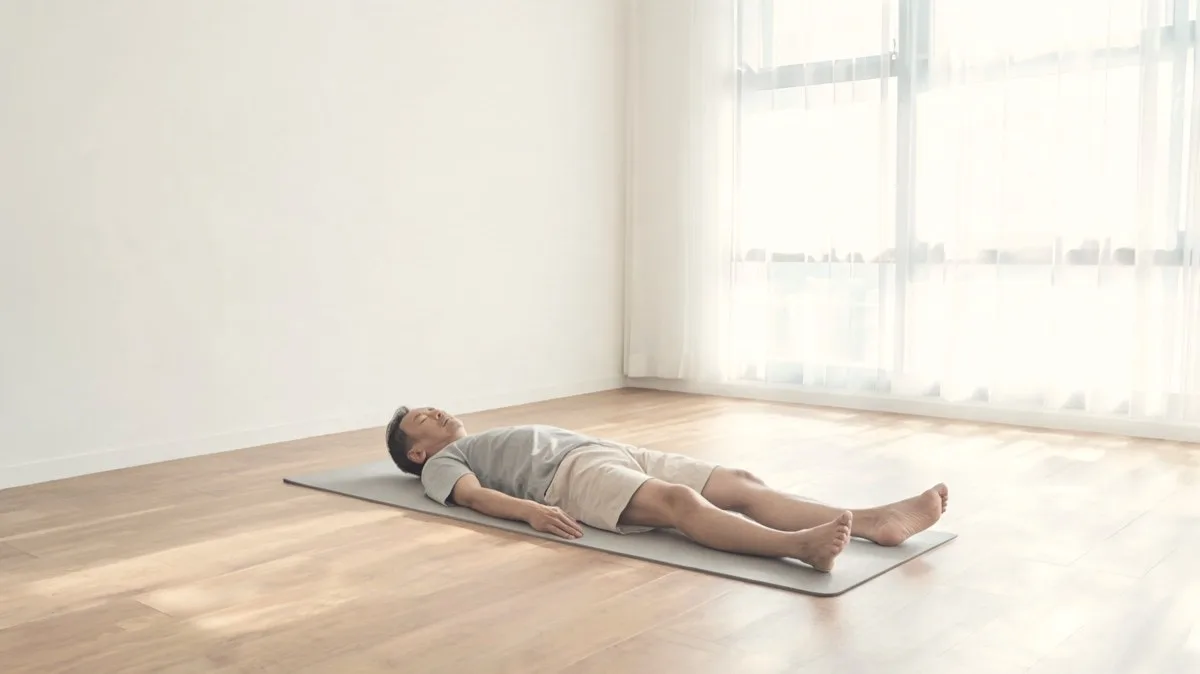
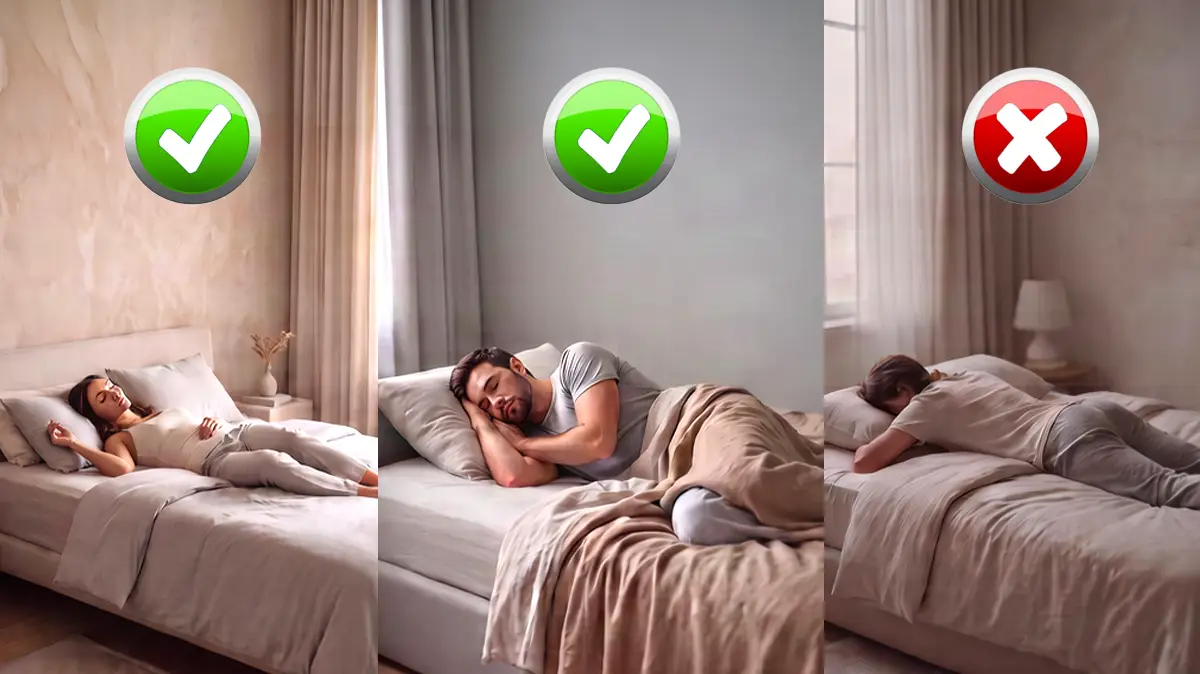
- The best sleeping positions for neck pain are on your back or on your side, with the head level with the spine.
- Stomach sleeping is the one position that reliably makes neck pain worse; it holds the neck rotated at end range for hours.
- Position and pillow height are one system: the same position succeeds or fails on loft.
- Change positions gradually; a neck retrains in weeks, not nights.
The best sleeping position for neck pain is the one that keeps your head level with your spine for seven straight hours, and for almost everyone that means back sleeping or side sleeping done properly, with stomach sleeping as the position to escape. We say this with the confidence of people who have spent more than a decade paying for bad nights with painful mornings: position is half the sleep equation (the pillow is the other half), and it’s the half that costs nothing to fix. Here is how each position actually treats your neck, and how to make the move if yours is working against you.
Back sleeping: the gold standard, with two rules
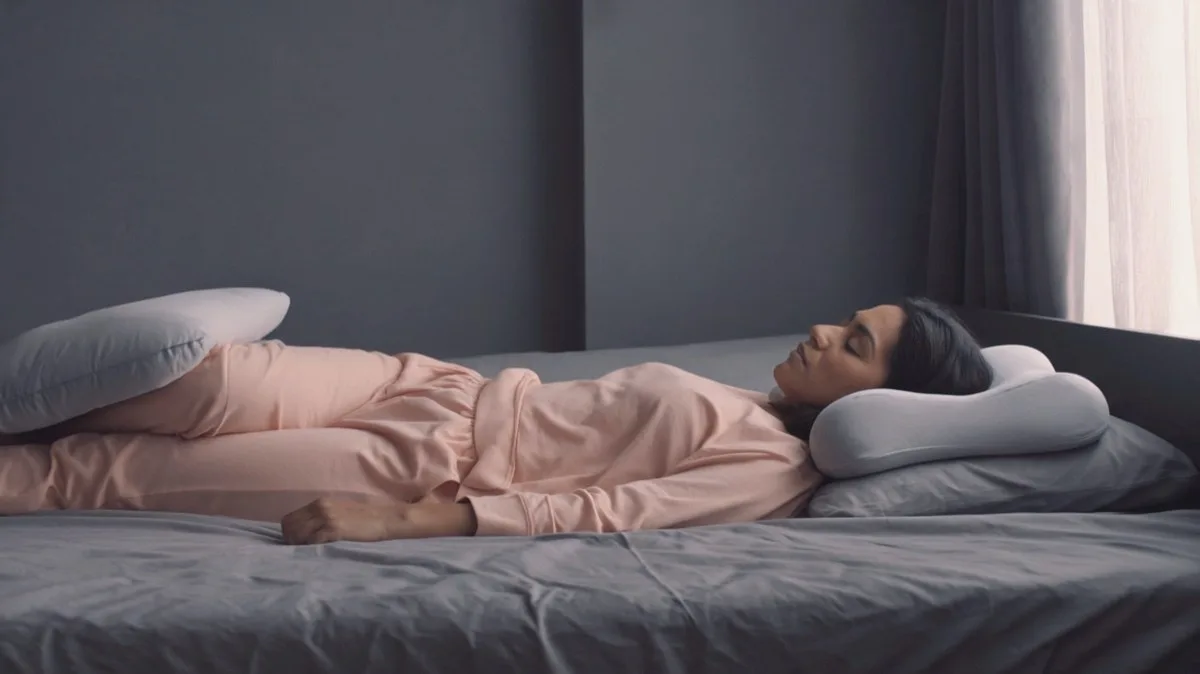
On your back, gravity is neutral: the head rests in line with the spine, nothing is rotated, and the neck’s natural curve can be supported directly. For neck pain generally, and occipital neuralgia especially, this is the position we recommend first, it’s the whole premise of our occipital neuralgia sleep guide. The two rules that make it work: a pillow low enough that the chin is not pushed toward the chest (roughly 3 to 5 inches compressed, and a cervical contour design is ideal here, see our pillow guide), and support under the neck’s curve, not just under the skull. A pillow under the knees is the finishing touch: it softens the lower-back arch and makes the whole position more sustainable.
The honest downside: back sleeping and snoring are old friends, and some people simply cannot fall asleep face-up. If that is you, well-executed side sleeping is a close second, not a consolation prize.
Side sleeping: excellent, if the loft is right

Side sleeping keeps the spine straight when, and only when, the pillow fills the full gap between shoulder and ear. That gap is bigger than most pillows: roughly 4 to 6 inches compressed for most adults, which is why so many side sleepers wake stiff on pillows that measured fine in the shop and collapsed by midnight. The complete numbers are in our pillow height guide, and the pillows that hold their loft are in the side sleeper roundup.
Technique details that matter more than they look: keep the pillow’s edge pulled down to meet the top of the shoulder so the neck is supported along its whole length, not bridged; keep the nose pointing the same direction as the breastbone (head rotated toward the ceiling or the mattress is a stealth version of the stomach-sleeping problem); and if you wake with an arm wedged under the pillow, read it as a message that the loft is too low. Shoulder aching on the down side usually means the mattress is too firm for the position rather than the position being wrong.
Stomach sleeping: the position your neck cannot afford
To breathe on your stomach, your head must turn fully to one side, and it stays there, at or near the joint’s end range, under the weight of the head, for hours. No pillow fixes that geometry; padding a rotation does not un-rotate it. If you have neck pain and sleep prone, this is very likely a load-bearing part of the problem, and the mornings after are the receipts (our guide to severe neck pain after sleeping walks the full diagnosis). If you genuinely cannot switch, harm-reduce: the thinnest possible pillow or none, a flat pillow under the pelvis to reduce the lumbar arch, and alternate the rotation side. But treat those as scaffolding for the real project, which is leaving the position.
 What we use
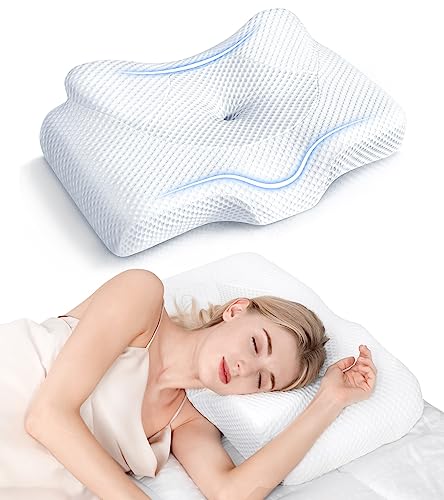
Osteo Cervical Pillow
The loft problem described above is exactly what this one is built for. The height adjusts, so you can match it to your own shoulder width instead of hoping a fixed pillow happens to suit you.
Check the Osteo pillow on AmazonAs an Amazon Associate we may earn from qualifying purchases, at no extra cost to you.
How to change your sleeping position (it can be done)
- Start the night in the target position, every night. You cannot control where you drift at 3am, but the position you fall asleep in claims a growing share of the night as weeks pass.
- Use pillows as barriers. Migrating from stomach: a body pillow hugged along your front gives the missing chest contact that drives most prone sleeping, and physically obstructs the roll. Building side sleeping: a pillow snug at your back discourages rolling flat.
- Make the target position the comfortable one. Right loft, knee pillow for side sleeping, knees-pillow for back sleeping. Comfort wins the argument with your sleeping self; discipline does not.
- Expect two to four weeks of imperfect nights, and judge the project by the trend in your mornings, not by any single night.
- If mornings are not improving after a month despite position and pillow both being right, the mattress or something upstream deserves the audit next; our morning stiffness guide runs the checklist.
The first fifteen minutes of the night
Position work happens at lights-out, so it pays to make those minutes deliberate. The routine that has served us for years: set the stage before getting in (knee pillow on the bed for side sleeping, or knees-pillow placed for back sleeping, so the setup requires no willpower), spend one minute settling the shoulders down and away from the ears, they carry the day’s tension into bed otherwise, and take three or four slow breaths once in position, long exhales, letting the mattress take the full weight of the head. If the neck arrived at bedtime already tight, a twenty-minute heat session an hour before bed changes what the first hour of sleep does to it; on rough evenings we treat that as non-negotiable. None of this is sleep-hygiene theater. A neck that enters the night relaxed and correctly supported spends its seven hours recovering; one that enters clenched and badly propped spends them compounding. The difference is waiting for you at 6am either way.
The best sleeping positions for neck pain, by problem
| Your situation | Best position | The detail that matters |
|---|---|---|
| General neck pain or stiffness | Back, or side | Loft matched to position; contour pillow for back sleepers |
| Occipital neuralgia | Back first | Pressure off the skull base; cervical support under the curve |
| Neck pain plus snoring or reflux | Side | Full-gap loft, pillow edge meeting the shoulder |
| Neck pain plus shoulder pain | Back, or the unaffected side | Softer mattress surface if the down-shoulder aches |
| Committed stomach sleeper | Transition via body pillow | Thinnest pillow meanwhile; alternate rotation sides |
A word for combination sleepers, since most of us are one to some degree: you do not need to police every position change, and trying to ruins sleep faster than any posture does. Optimize the position you start in and the loft you start on, use the barriers, and let the night do what nights do. The averages are what your neck feels in the morning, and the averages respond beautifully to getting the start right.
Frequently asked questions
What is the best sleeping position for neck pain?
Back sleeping with a properly sized cervical pillow is the gold standard, with well-set-up side sleeping a close second. Stomach sleeping is the position to move away from: it holds the neck fully rotated for hours.
Is it better to sleep without a pillow for neck pain?
Only for stomach sleepers, where less height means less extension. For back and side sleepers, no pillow lets the head drop below spine level and loads the neck all night. The goal is the right height, not the absence of one.
Why does my neck hurt more after a full night’s sleep?
Because seven motionless hours in a poor position is the longest sustained load your neck experiences all day. Position, pillow height and mattress each contribute; work through them in that order, they are also the cheapest-to-most-expensive order.
How long does it take to get used to a new sleeping position?
Typically two to four weeks of starting every night in the target position, with pillow barriers doing the overnight enforcement. Judge progress weekly by your mornings, not nightly.
The health information in this guide is supported by the trusted medical sources below. It’s general information, not a diagnosis or medical advice. See our medical disclaimer.
Sources and further reading
Was this guide helpful?
Thank you. Your feedback helps us improve.