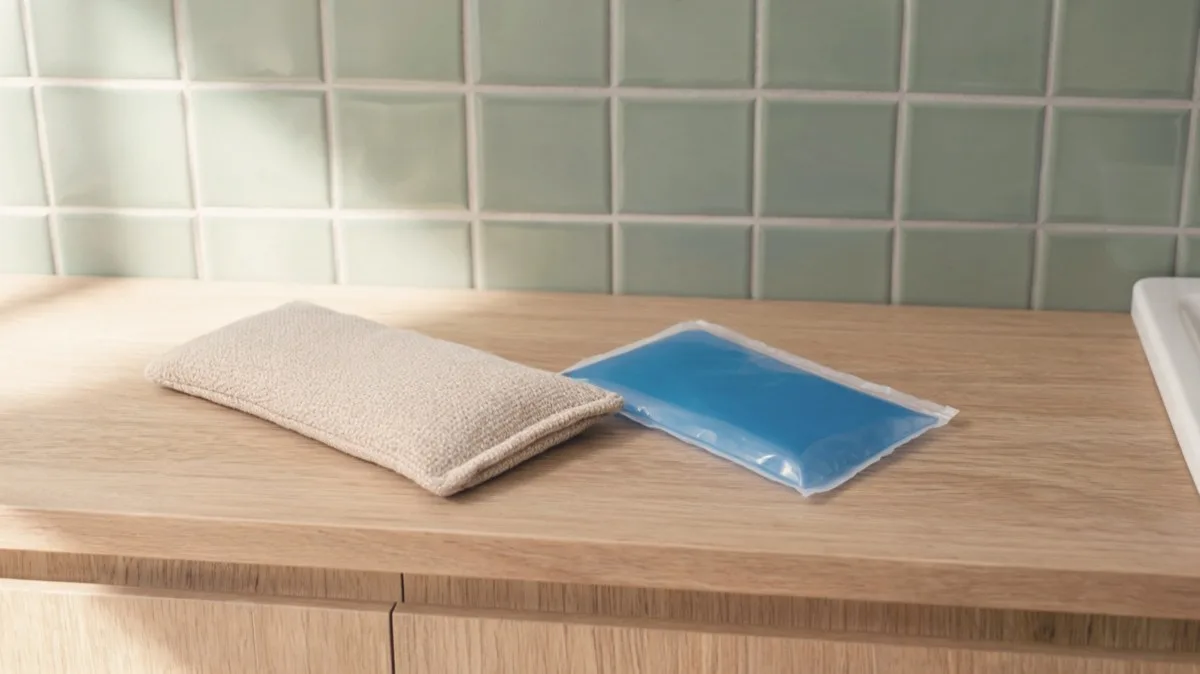
- For most occipital neuralgia flares, heat wins: it relaxes the tight suboccipital muscles that irritate the nerves.
- Ice earns its place in the first day or two after a fresh strain, or when the scalp is too hypersensitive for warmth.
- The most effective pattern we know: heat on the neck and skull base, and if you use ice, use it briefly and wrapped.
- Neither treats the underlying cause; they manage flares while you fix triggers like pillow, posture and stress.
Heat or ice for occipital neuralgia? For most flares, most of the time, the answer is heat, applied to the base of the skull and upper neck, because the fastest available lever on occipital nerve pain is relaxing the tight suboccipital muscles that surround and irritate those nerves. Ice has a real but narrower role: fresh strains, and the minority of flares where the scalp is so electric that warmth feels like too much input. After more than a decade of living with this condition, that split decision is one we make weekly, and this guide is the reasoning behind it.
Why heat usually wins for occipital neuralgia
Occipital neuralgia is nerve pain, but in day-to-day life it rarely acts alone. The greater and lesser occipital nerves thread through the muscles at the top of your neck, and when those muscles clamp down (after a desk day, a bad night, a stressful week) they compress and irritate the nerves passing through them. That is why so many flares have a muscular prologue: the stiff, gripping tightness at the skull base that arrives before the electric pains do.
Heat attacks exactly that prologue. Warmth on the upper neck increases blood flow, drops muscle tone, and reduces the pressure on the nerve at its most vulnerable point. It also calms the pain system generally: warm input travels the same pathways as pain and competes with it. In practice, twenty minutes of moist heat at the right moment can head off an evening flare before it establishes itself. A hot shower aimed at the back of the head works on the same principle, and many sufferers (us included) treat it as first aid.
Delivery matters: you want heat that hugs the curve where skull meets neck, which is why we rate horseshoe-style wraps. Our full guide to the best heated neck wraps covers the options; the short version is that a cheap microwavable moist-heat wrap is one of the best value tools in the entire occipital neuralgia kit.
Where ice earns its place
Ice is not the default for this condition, but there are two situations where it’s the right call. The first is a genuinely fresh injury: if your flare traces to a specific strain in the last 24 to 48 hours (a wrench, a sleep accident, an overdone workout), brief cold applications help settle the initial inflammatory response before you switch to heat.
The second is sensory. Some flares come with allodynia, the strange scalp hypersensitivity where even a hairbrush or pillow contact feels wrong. In that state, some people find warmth adds to the noise while cold quiets it: a wrapped cold pack held gently at the skull base for ten minutes can numb the area enough to break the escalation. This one is individual; we know sufferers on both sides. Treat it as an experiment with a fast answer, because you will know within minutes which camp you are in.
Two cold rules that are not optional: always wrap the pack (never ice directly on skin, and the skin over the occipital region is thin), and keep sessions to ten or fifteen minutes with proper breaks. Prolonged icing of an already-irritable nerve can leave it angrier.
The pattern that works: our decision guide
- Tight, gripping, end-of-day flare building at the skull base: heat, twenty minutes, then gentle mobility. This is the everyday case.
- Morning-after flare from a bad pillow night: heat, plus fix the pillow problem it came from (our guide to sleeping with occipital neuralgia covers this in depth).
- Fresh strain in the last 48 hours: wrapped ice first, short sessions, then transition to heat as the acute phase settles.
- Electric scalp, everything-is-too-much flares: try brief wrapped cold at the skull base; if it helps, keep it in the kit for those days.
- Either way: the session is the opening move, not the treatment. What follows (position, stress, screen breaks, the pillow) decides the week.
How to apply heat to the occipital region properly
- Choose moist heat where possible: it penetrates the suboccipital muscles better than dry warmth at the same comfort level.
- Position matters more than temperature: the wrap should sit in the curve where the skull meets the neck, not across the shoulders alone.
- Warm, never hot. If you would not press it to your cheek comfortably, it’s too hot for the neck.
- Twenty minutes, then move: slow chin tucks or the gentle routine in our occipital neuralgia exercises guide, while the muscles are warm and willing.
- Repeat later if needed; two or three sessions spaced through a bad day beat one marathon session.
 What we use
Carex Bed Buddy Heat Pad and Cooling Neck Wrap
Does both jobs on this page. Microwave it for moist heat, chill it for cold, and it’s shaped to sit in the curve where the skull meets the neck.
Check the Carex wrap on AmazonAs an Amazon Associate we may earn from qualifying purchases, at no extra cost to you.
When neither heat nor ice is the answer
Heat and ice are flare management. If flares are arriving more often, lasting longer, or your baseline is drifting downward, the useful work is upstream: identifying your triggers, correcting the sleep setup, and building the small daily habits in our home treatment guide. And some symptoms take you off the self-care path entirely: seek medical advice promptly for a sudden thunderclap headache, fever with neck stiffness, new numbness or weakness, or any dramatic change in your usual pattern. Those are not occipital neuralgia questions; they are see-a-doctor questions.
What a well-managed flare day looks like
Putting it together, here is the shape of a day where heat is doing its job. The first warning signs at the skull base get a twenty-minute moist heat session early, not after three more hours at the desk. The session ends with two minutes of gentle chin tucks and slow, small range-of-motion work while the muscles are warm. Screens get interrupted every half hour for the rest of the day, even just for thirty seconds of looking away and letting the shoulders drop. In the evening, a second heat session if the tightness is rebuilding, and then the part that decides tomorrow: the right pillow, at the right height, so the muscles that spent the day being coaxed loose are not clamped again overnight. None of these steps is dramatic. The compounding of them is what turns a would-be three-day flare into a rough afternoon.
And if you only take one product idea from this page: a microwavable moist-heat wrap and a wrapped gel cold pack together cost less than a single therapy session, cover both sides of this guide, and earn a permanent place in the flare kit.
Frequently asked questions
Should I use heat or ice for occipital neuralgia?
Heat, for most flares: it relaxes the tight muscles at the skull base that irritate the occipital nerves. Choose ice for the first day or two after a fresh strain, or briefly if your scalp is too hypersensitive for warmth.
Can a hot shower help an occipital neuralgia flare?
Yes, and it’s one of the most commonly reported forms of relief among sufferers: warm water directed at the back of the head and neck relaxes the suboccipital muscles quickly. Treat it as a useful session, then follow with gentle movement rather than returning straight to the posture that caused the flare.
How long should I apply heat to my neck?
About twenty minutes per session is the sweet spot, repeated two or three times across a difficult day. Longer sessions add little and increase skin irritation risk, especially with electric wraps.
Can ice make occipital neuralgia worse?
It can, if overdone: long, direct icing of an irritable nerve region can increase sensitivity afterward. Keep cold sessions short, always wrapped, and abandon the experiment if cold consistently leaves you worse an hour later.
The health information in this guide is supported by the trusted medical sources below. It’s general information, not a diagnosis or medical advice. See our medical disclaimer.
Sources and further reading
Was this guide helpful?
Thank you. Your feedback helps us improve.