Sitting is often the single worst position for sciatica. It increases pressure on the lower spine and can compress the sciatic nerve directly, yet for most of us, sitting all day is unavoidable. The goal is not to stop sitting (impossible for most jobs) but to sit in a way that minimizes the strain, and to break it up often enough that pressure never builds. Here is exactly how.
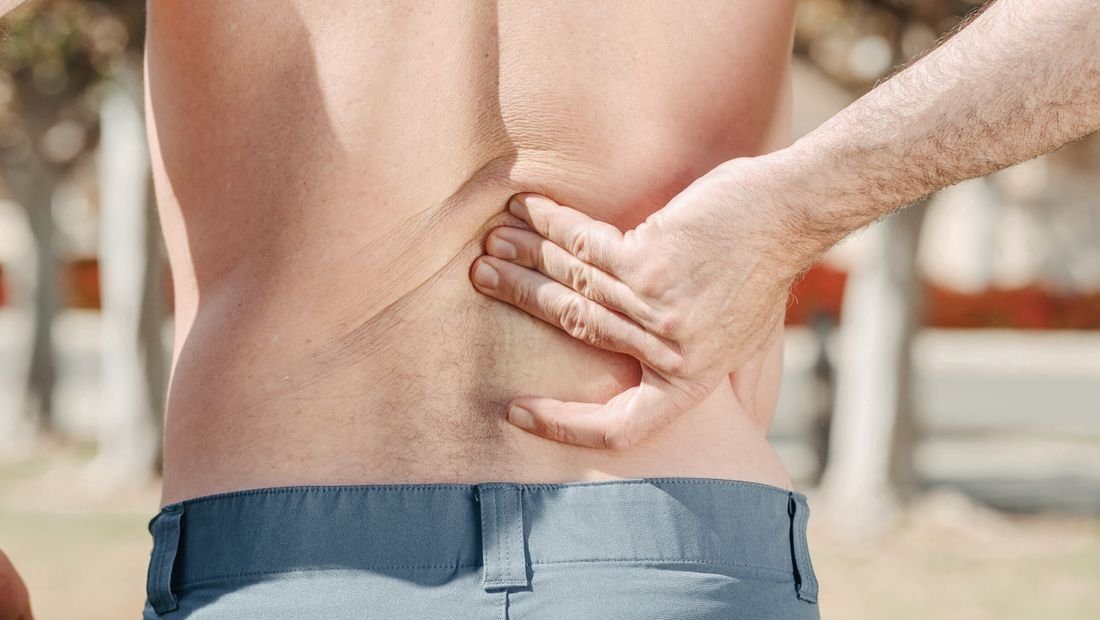
Why Sitting Aggravates Sciatica
When you sit, the pressure on the lumbar discs is actually higher than when you stand, and higher still when you slump forward. If a disc is already pressing on the sciatic nerve, that extra load makes it worse. Sitting on a wallet, or on a hard edge, can also compress the nerve through the buttock. The combination of disc pressure and direct nerve compression is why a long meeting or car journey can leave you in agony.
How to Sit With Sciatica
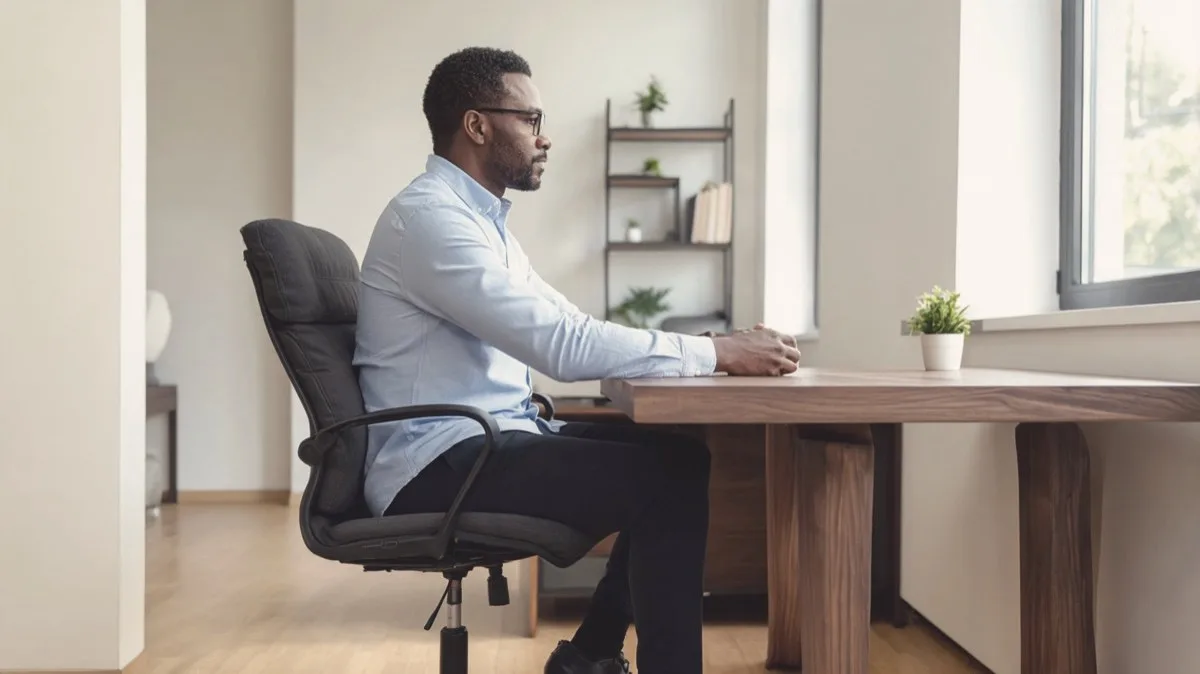
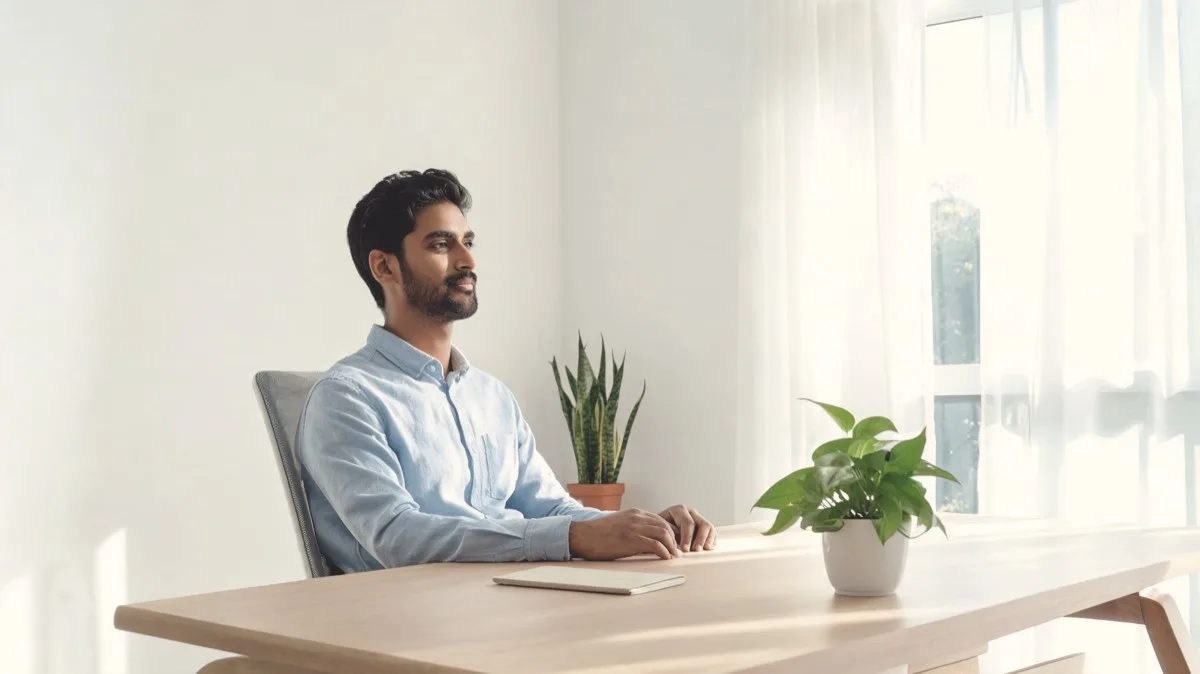
- Keep your hips slightly higher than your knees to maintain the lower-back curve.
- Sit all the way back in the chair with your lower back supported.
- Keep both feet flat on the floor, do not cross your legs, which twists the pelvis.
- Use a lumbar cushion to support the natural curve of the lower back.
- Never sit on anything in your back pocket, which tilts the pelvis and can press the nerve.
Set Up Your Workspace
A supportive chair with good lumbar support is essential, the principles in our guide to the best ergonomic office chair apply just as much to the lower back. A seat cushion with a cut-out for the tailbone can relieve direct pressure on the nerve, and a sit-stand desk lets you alternate between sitting and standing, which is the single best thing you can do.
 What we use
ComfiLife Gel Enhanced Seat Cushion
For the workspace setup above. A gel and memory foam wedge that takes the load off the point that hurts when you have to stay seated.
Check the ComfiLife cushion on AmazonAs an Amazon Associate we may earn from qualifying purchases, at no extra cost to you.
Take Regular Breaks, This Is the Key
No sitting position, however good, is healthy if you hold it for hours. Stand and move at least every 30 minutes, even if only for a moment. A short walk and a gentle stretch reset the pressure on the nerve and prevent the stiffness that builds with stillness. Setting a timer is not over-the-top, it’s often the most effective single change a desk worker with sciatica can make.
Stretches You Can Do at Your Desk
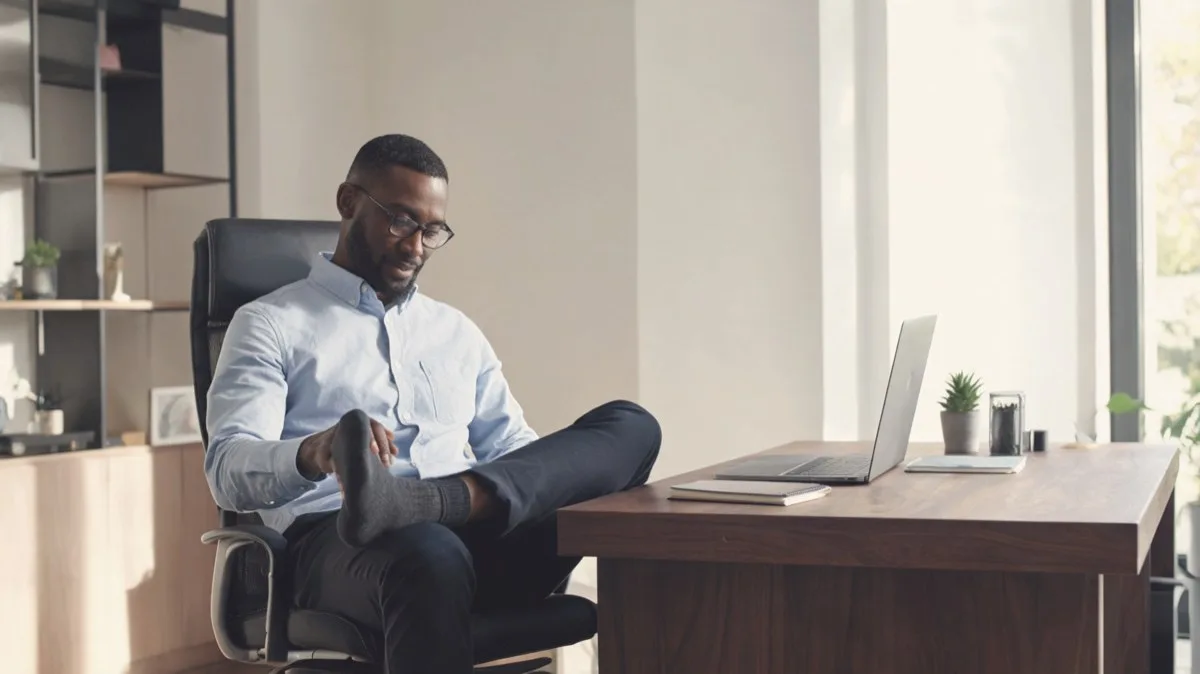
A seated figure-four stretch (ankle resting on the opposite knee, leaning gently forward) relieves pressure through the buttock without leaving your chair. A standing back extension every hour counteracts hours of forward flexion. See our full set of sciatica exercises for more.
Frequently Asked Questions
Is sitting or standing better for sciatica?
Standing usually puts less pressure on the lumbar discs than sitting, but staying in any one position too long is the real problem. Alternating between sitting and standing, with regular movement, is best.
What kind of cushion is best for sciatica?
A firm foam seat cushion with a tailbone cut-out relieves direct pressure on the nerve, while a lumbar cushion supports the lower back. Many people benefit from using both together.
How long can I sit with sciatica?
Try not to sit for more than about 30 minutes at a stretch without standing or moving. Frequent short breaks matter more than any single perfect sitting position.
Why does sitting make my sciatica worse but walking helps?
Sitting increases pressure on the lumbar discs and can compress the nerve, while gentle walking keeps the spine mobile and the nerve moving freely. This is common with sciatica.
The information on this site is based on personal experience and research. It’s not medical advice. Always consult a qualified healthcare professional for diagnosis and treatment.
When to seek medical help
See a doctor if sciatica or back pain does not improve after a few weeks or keeps worsening. Seek urgent care (call 911 or go to your nearest emergency room) for numbness around the genitals or buttocks, trouble urinating, or loss of bladder or bowel control.
This guide combines personal experience of living with sciatica and back pain with guidance from the medical sources below. It’s general information, not a diagnosis or medical advice. See our medical disclaimer.
Sources and further reading
Was this guide helpful?
Thank you. Your feedback helps us improve.