
If you spend your days at a desk, your chair has an enormous influence on your neck and back, far more than most people realize. A poor one quietly encourages slouching and a forward-head posture for eight hours a day, and that is exactly the pattern that drives chronic neck pain, tension headaches and back ache.
A good ergonomic chair does the opposite. It supports your spine in a neutral position and makes good posture the path of least resistance, so you hold it without thinking. This guide covers the features that genuinely matter, how to set a chair up correctly, and how to choose one for neck pain.
We learned this one the hard way. After years of desk work on top of chronic neck and back pain, the chair turned out to matter far more than we expected, and the wrong one quietly cost us our evenings. So we look at these chairs through the lens of a full working day with a sore neck, not a five-minute showroom sit.
Adjustable ergonomic chair for neck and back pain
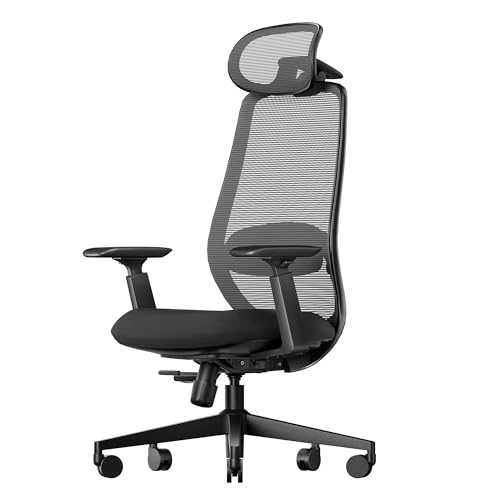
ProtoArc EC200 Ergonomic Office Chair
This adjusts further than most chairs at any price, and the adjustments are the ones that actually matter for a sore neck.
- Lumbar support moves 2.36in for height and 0.8in for depth, so it sits where your back curves rather than where the factory guessed
- Headrest lifts, tilts and rotates
- Seat pan slides through five positions, which matters if you are short or long in the thigh
- Backrest runs 90° for focused work to 130° for a break, with tension control
- Certified to BIFMA X5.1 and BS EN 1335, with a TÜV-tested class 4 gas lift
Paid link. We earn a higher commission on this chair as part of a brand campaign, at no extra cost to you.
✔ Pros
- Lumbar adjusts for height and depth, which most chairs do not
- Headrest lifts, tilts and rotates
- Sliding seat depth, five positions
- BIFMA X5.1 and BS EN 1335 certified
✖ Cons
- The maker states it suits 5ft 4in to 6ft, under 220lb
- Assembly required
Chair features that matter
| Feature | Why it matters |
|---|---|
| Adjustable lumbar support | Maintains the lower-back curve |
| Seat height and depth | Keeps hips and knees aligned |
| Adjustable armrests | Take load off the neck and shoulders |
| A headrest | Supports the neck when reclining |
| Recline and tilt | Let you shift posture through the day |
Why Your Chair Matters So Much
Posture is not really about willpower, it’s about your environment. If your chair offers no lumbar support, you will slump no matter how often you remind yourself to sit up. When the lower back rounds, the upper back follows, the head drifts forward to keep your eyes level, and the muscles at the base of the skull end up under constant strain. That forward-head position is the root of most desk-related neck pain and a major trigger for text neck and tension headaches. The right chair breaks that chain at the source.
Features of the Best Ergonomic Office Chair
Adjustable lumbar support
The single most important feature. It maintains the natural inward curve of your lower back, which keeps the whole spine, including your neck, stacked and aligned. Look for support that adjusts in both height and depth so it fits the small of your back, not an average one.
Adjustable seat height and depth
Your feet should rest flat on the floor with your knees at roughly 90 degrees. The seat depth should let you sit right back against the lumbar support with two or three fingers of gap behind your knees.
Adjustable armrests
Armrests that support your forearms take the weight of your arms off your neck and shoulders, a surprisingly large source of tension. They should let your shoulders relax down rather than hunch up toward your ears.
A headrest
For neck pain specifically, a headrest gives the neck somewhere to rest during pauses and phone calls, reducing the constant low-level effort of holding your head up all day.
Recline and tilt
A slight, lockable recline reduces the pressure on your spine compared with sitting bolt upright, and lets you shift position through the day, movement matters as much as any single “correct” posture.
Setting Up Your Chair Correctly
Even the best chair fails if it’s set up poorly, and most people never adjust theirs. Work through it in order: set the height so your feet are flat and elbows level with the desk; slide the lumbar support into the curve of your lower back; position the armrests so your shoulders relax; then raise your monitor so the top of the screen is at eye level. The chair and screen work as a pair, a perfect chair with a low laptop screen will still pull your head down.
Beyond the Chair
No chair removes the need to move. Take a short break at least every 30 to 45 minutes, and pair good seating with daily neck exercises and an awareness of your phone posture. A sit-stand desk, if you can stretch to one, adds the single best variable of all: the ability to change position through the day.
Frequently Asked Questions
Can an office chair really reduce neck pain?
Yes, indirectly but powerfully. By supporting your lower back and encouraging an upright posture, a good chair prevents the forward-head slump that causes most desk-related neck pain.
Are expensive ergonomic chairs worth it?
For full-time desk workers, usually yes, the adjustability and build quality directly affect your spine for thousands of hours. That said, a correctly set-up mid-range adjustable chair beats an expensive chair used wrongly.
What is the most important chair feature for neck pain?
Adjustable lumbar support. It keeps the lower back curved correctly, which keeps the upper spine and neck aligned and stops the forward-head slump.
Should an office chair have a headrest for neck pain?
It helps. A headrest gives your neck somewhere to rest during breaks and calls, reducing the all-day muscular effort of holding your head up, though good lumbar support matters more.
The information on this site is based on personal experience and research. It’s not medical advice. Always consult a qualified healthcare professional for diagnosis and treatment.
Ready to try the ProtoArc EC200 Ergonomic Office Chair?
Check the latest price and availability on Amazon.
Check the ProtoArc EC200 on AmazonRelated reading
The health information in this review is supported by the trusted medical sources below. It’s general information, not a diagnosis or medical advice. See our medical disclaimer.
Sources and further reading
Was this guide helpful?
Thank you. Your feedback helps us improve.