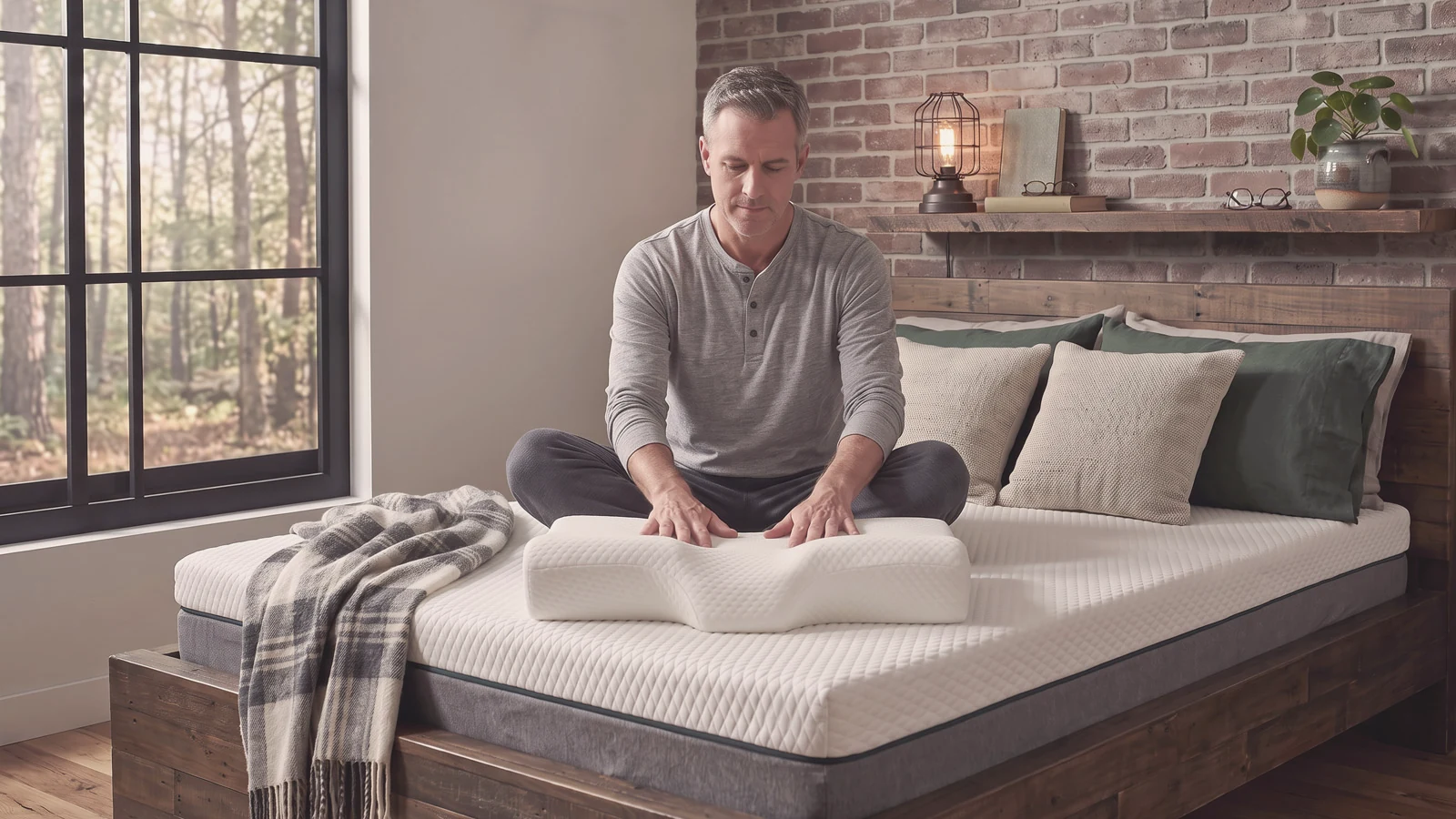
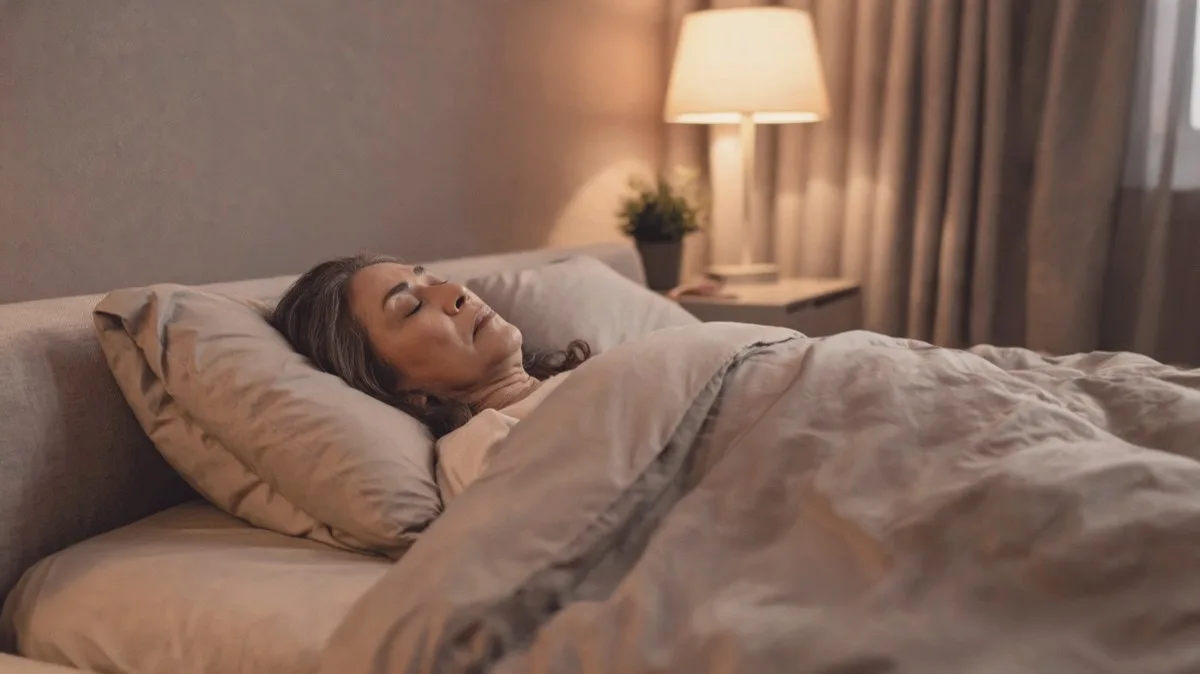
- The pillow is the single biggest change: a cervical pillow keeps the natural curve of your neck in neutral alignment all night.
- Sleep on your back if you can. It rests your neck in neutral and spreads the weight of your head evenly.
- Side sleeping can work if your pillow keeps your head level with your spine and your shoulder stays down, away from your ear.
- Avoid sleeping on your stomach. It holds your neck rotated for hours and strains the suboccipital muscles all night.
- Wind down before bed with massage, gentle stretches and a little heat, and keep the back of your neck out of cold drafts.
The best way to sleep with occipital neuralgia is on your back, on a cervical pillow that keeps your neck in neutral alignment. Side sleeping can work with the right pillow height, and stomach sleeping is the one position worth giving up.
Sleep is when occipital neuralgia can do its worst damage. Hours in the wrong position, on the wrong pillow, with unaddressed muscle tension – and you wake up in a flare-up before the day has even started. Getting your nights right is the single most impactful change most sufferers can make. After more than 25 years of personal experience, here is what genuinely works.
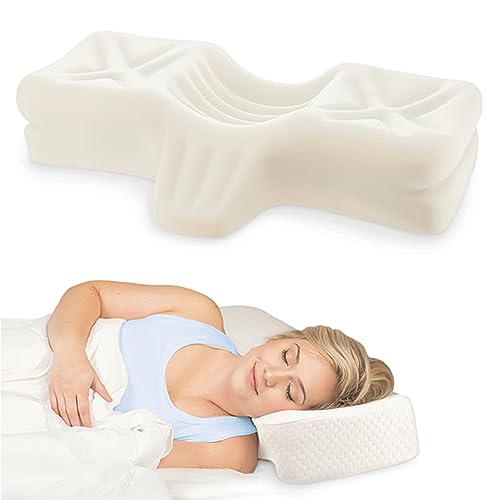
Therapeutica Sleeping Pillow
The chiropractor-designed cervical pillow we have relied on for over 10 years to keep the neck aligned overnight.
Check price on AmazonAs an Amazon Associate we may earn from qualifying purchases, at no extra cost to you.
After more than 25 years of our own nights with occipital neuralgia, this is the area we have refined the most, and the changes below are the ones that made the biggest difference for us.
1. Invest in the Right Pillow
If there is one change to make, it’s this. The wrong pillow keeps your upper cervical spine out of alignment for 7-8 continuous hours, applying sustained pressure on the occipital nerves. No amount of daytime treatment can fully compensate for that. A good cervical pillow keeps the natural curve of the neck in neutral alignment and takes pressure off the base of the skull. Our full recommendation is in the best pillow for occipital neuralgia.
Check the Therapeutica pillow on Amazon
2. Sleep on Your Back if You Can
Back sleeping is the best position for occipital neuralgia. It allows the cervical spine to rest in neutral, distributes the weight of the head evenly, and avoids the lateral neck stress that side sleeping creates. Make sure your pillow loft is appropriate – not so high that your chin is pushed toward your chest, not so low that the back of your neck is unsupported.
3. Side Sleeping: How to Make It Work
Many people are natural side sleepers. It can work if you address two things. First, pillow loft: your pillow must be high enough to keep your head level with your spine – if your head drops, the lateral neck muscles stretch all night and pull on the suboccipital region. Second, shoulder position: avoid letting your shoulder creep up toward your ear. A pillow with an armrest feature or a body pillow helps keep the shoulder down and the neck long.
4. Never Sleep on Your Stomach
Stomach sleeping is the worst position for the cervical spine. It forces the neck into rotation for extended periods, compresses the facet joints, and strains the suboccipital muscles all night. If you are a habitual stomach sleeper, transitioning is hard but worth it – a body pillow alongside you can prevent rolling over.
5. Build a Pre-Bed Routine
What you do in the 20-30 minutes before sleep significantly affects how your neck feels overnight. Our nightly routine: 10 minutes with a neck massager on the suboccipital region, a few chin tucks, a lateral neck stretch on each side, and a heat pack for 5 minutes if there is residual tension. This takes under 20 minutes and consistently reduces overnight flare-ups. See our full set of exercises for occipital neuralgia.
Keep the Back of Your Neck Warm
Cold air on the back of the neck is a documented trigger. Check that you are not sleeping with the back of your neck exposed to air conditioning, a fan, or a window draft. A light neck tube during cold months can make a real difference.
Frequently Asked Questions
What is the single best change for sleeping with occipital neuralgia?
The pillow. Consistently, the biggest improvement comes from replacing an unsupportive pillow with a proper cervical pillow designed for neck alignment.
Should I use heat or cold at night?
Heat before bed to reduce muscle tension. Cold is better during or immediately after an acute flare-up to reduce inflammation.
The information on this site is based on personal experience and research. It’s not medical advice. Always consult a qualified healthcare professional for diagnosis and treatment.
Ready to try the Therapeutica Sleeping Pillow?
Check the latest price and availability on Amazon.
Check price on AmazonWhen to seek medical help
See a doctor if neck pain follows an injury, comes with fever, severe headache, pins and needles, numbness or weakness in the arms, or does not improve after a few weeks.
This guide combines personal experience of living with occipital neuralgia with guidance from the medical sources below. It’s general information, not a diagnosis or medical advice. See our medical disclaimer.
Sources and further reading
Was this guide helpful?
Thank you. Your feedback helps us improve.