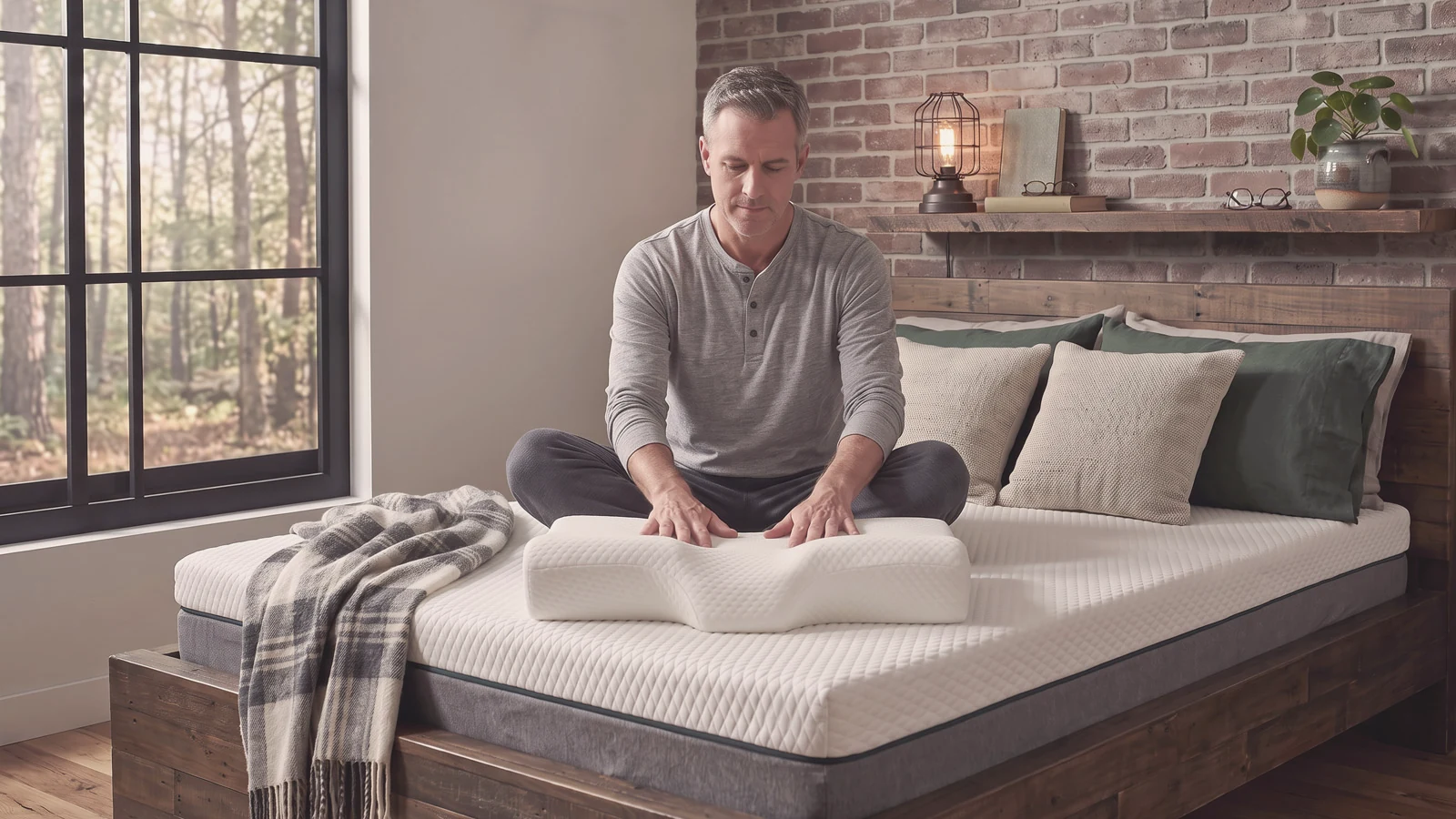

- Lying down concentrates pressure directly onto the occipital region and changes the neck’s geometry, which is why flares love bedtime.
- The four usual mechanisms: direct pillow pressure on the nerves, a kinked neck from wrong loft, stomach-sleeping rotation, and evening muscle tension arriving at the pillow.
- Fixes exist for each: pressure off the skull base, correct pillow height, position change, and a pre-bed wind-down for the suboccipitals.
- Pain that is strictly positional and new, or wakes you with neurological symptoms, deserves medical assessment.
Occipital neuralgia worse lying down is one of the cruelest patterns this condition runs: the moment of the day built for relief becomes the trigger. You lower your head to the pillow, and within minutes the pressure, tingling or electric jabs at the back of your skull start negotiating with your sleep. We have spent more than 25 years on both sides of this exact problem, and the good news is that it’s usually mechanical, explainable, and improvable, because lying down changes three specific things for the occipital nerves, and every one of them has a handle.
Mechanism one: direct pressure on the nerves
The greater and lesser occipital nerves surface at the back of the head, exactly where a back sleeper’s skull meets the pillow. If the nerves are already irritated, several hours of bodyweight pressure on that real estate is a slow interrogation, and a firm, unyielding pillow makes it worse. This is the mechanism when the pain builds gradually through the night, eases when you shift onto your side, and leaves the back of your scalp tender by morning. The fix is not a softer sinkhole of a pillow (that creates mechanism two); it’s a pillow shaped to cradle the skull while supporting the neck, so contact pressure spreads away from the nerve exit points. This single geometry problem is why cervical contour pillows dominate our occipital neuralgia pillow guide, and why the shape matters more than the fill.
Mechanism two: the kinked-neck problem
Wrong pillow height bends the neck for hours, and the occipital nerves pass through the exact muscles that bend it. Too high, and the head is pushed into flexion, stretching and compressing the suboccipital tissue; too low, and the head drops into extension, closing down the space at the skull base where the nerves emerge. Either way the muscles guard, and guarded suboccipitals are the classic nerve-squeezers of this condition. The tell: the pain is worst on waking and eases as you move, and it tracks which pillow you slept on (hotel nights are informative). The numbers for getting height right by position and mattress are in our loft guide, and they matter more for this condition than for any other we cover.
Mechanism three: position, especially stomach sleeping
Stomach sleeping holds the head rotated to end range for hours, wringing the upper neck like a towel, and side sleeping with a collapsed pillow tilts the head downhill all night. Both feed the occipital region exactly the sustained strain it cannot tolerate. If your worst nights follow your prone nights, the position is the culprit, and the migration plan (barrier pillows, starting every night in the target position, two to four patient weeks) is laid out in our sleeping positions guide and the occipital-specific version in how to sleep with occipital neuralgia.
Mechanism four: the day arrives at the pillow with you
Sometimes lying down is not the cause, just the moment of reckoning. A day of desk tension winds the suboccipitals tight; upright, distraction and movement keep the signal below threshold, but horizontal in a quiet dark room, with the muscles finally asked to release, the irritation gets your full attention. The tell: the pain starts within minutes of lying down regardless of pillow or position, on days that were heavy on screens or stress. The fix lives before bedtime: a twenty-minute heat session an hour before bed (our heat guide covers the how), a few minutes of gentle sustained pressure at the skull base, and the day-level changes in the desk guide so less tension accumulates in the first place.
Occipital neuralgia worse lying down: which mechanism is yours?
The timing tells the story, so read it like one. Pain that builds gradually across the night and leaves the scalp tender by morning points to direct pressure (mechanism one). Pain that is worst at waking and eases with movement points to geometry, the height problem (mechanism two). Worst nights following prone or collapsed-pillow nights point to position (mechanism three). And pain that starts within minutes of lying down after heavy days, regardless of setup, points to arriving tension (mechanism four). Most long-term sufferers run a blend, us included, but one mechanism usually dominates, and a week of noticing which pattern fits will spend your effort where it pays. When two fixes apply, do the cheap one tonight (position, the wind-down) and the purchase one thoughtfully.
The bedtime protocol that works for us
- An hour out: heat on the skull base, twenty minutes, on any day that carried tension. Not optional on flare days.
- At lights out: back sleeping on a cervical contour pillow at the right height, or side sleeping with full-gap loft; the knee or barrier pillows already in place so no midnight improvisation is required.
- Settle deliberately: shoulders down away from the ears, three slow breaths, let the pillow take the head’s full weight. A clenched landing undoes the setup.
- If woken by it: resist the pillow-punching. Change position once, deliberately; if the electric pain persists, ten minutes upright with gentle skull-base pressure resets the situation better than an hour of angry repositioning.
- Morning after a bad night: heat before screens. It changes the day’s trajectory.
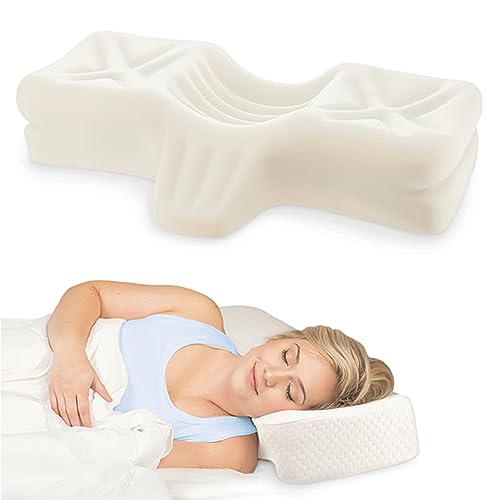 What we use
Therapeutica Ergonomic Cervical Pillow
The pillow we still use ourselves for exactly this problem. Sizing matters a great deal with this one, so read our full review before choosing a size.
Check the Therapeutica pillow on AmazonAs an Amazon Associate we may earn from qualifying purchases, at no extra cost to you.
When lying-down pain means something else
Positional head pain has a short list of impostors worth respecting. Head pain that is dramatically worse lying down and better standing, especially with morning vomiting or vision changes, or the reverse pattern (severe only when upright, relieved flat) are pressure-related patterns that need medical assessment, not pillow shopping. So does any new positional headache after a procedure or injury, or one accompanied by fever, weakness, numbness or confusion. Occipital neuralgia’s nighttime misery is real but it’s rarely dramatic in those ways; when in doubt, describe the pattern to a clinician and let them clear the runway.
Frequently asked questions
Why does occipital neuralgia get worse when I lie down?
Four common mechanisms: direct pillow pressure on the occipital nerves, a neck held bent by the wrong pillow height, rotation from stomach or poor side sleeping, and accumulated daily muscle tension finally getting your attention in the quiet. Each has a specific fix, and the pattern of your pain usually identifies which is yours.
What is the best position to sleep in with occipital neuralgia?
On your back with a cervical contour pillow that supports the neck’s curve and cradles the skull without pressing the nerve exit points, with properly-lofted side sleeping as the alternative. Stomach sleeping is the position this condition tolerates worst.
Can a pillow really trigger occipital neuralgia flares?
Yes, through both pressure and geometry: a too-firm surface presses directly on irritated nerves, and wrong height bends the neck that the nerves pass through. The pillow is the single most influential purchase for this condition, which is why we have tested them for a decade.
Should I be worried about headaches that change with position?
Dramatic positional patterns (much worse flat with morning vomiting or vision change, or severe only upright and relieved flat) need medical assessment, as do positional headaches after procedures or with neurological symptoms. Occipital neuralgia’s nighttime worsening is common and mechanical, but the impostors deserve one proper look.
The health information in this guide is supported by the trusted medical sources below. It’s general information, not a diagnosis or medical advice. See our medical disclaimer.
Sources and further reading
Was this guide helpful?
Thank you. Your feedback helps us improve.