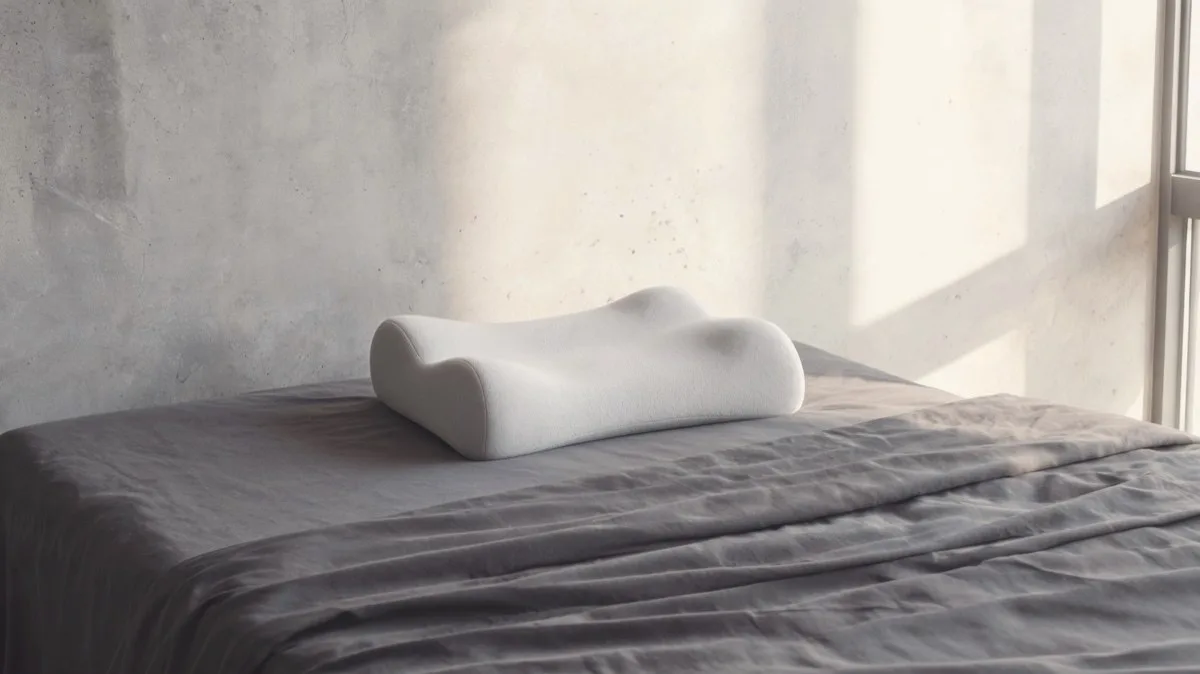
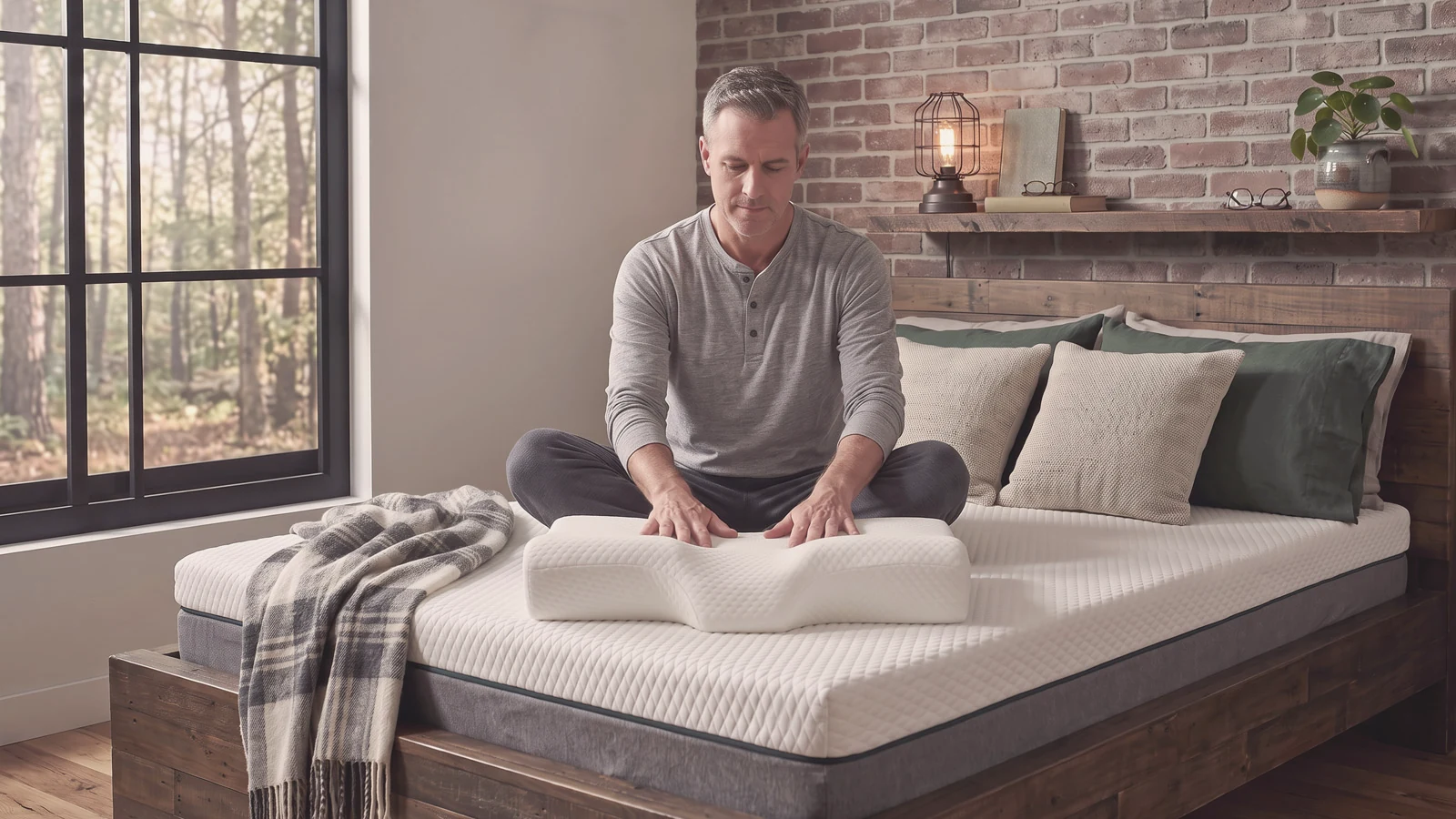
- For occipital neuralgia, a pillow must support the neck and take pressure off the base of the skull.
- A cervical contour pillow that holds its shape overnight works best; soft pillows that flatten make it worse.
- Our top pick after more than 10 years is the Therapeutica cervical pillow.
- Choose the loft that keeps your head level with your spine for your sleeping position.
Finding the best pillow for occipital neuralgia is far harder than it sounds. Most pillows are designed for general comfort, but occipital neuralgia demands something much more specific: a pillow that holds the upper cervical spine in precise neutral alignment all night long, while taking pressure off the occipital nerves at the base of the skull. Get it wrong and you wake in a flare before the day has even begun. Get it right and it becomes one of the single most effective tools you have.
Top pick at a glance
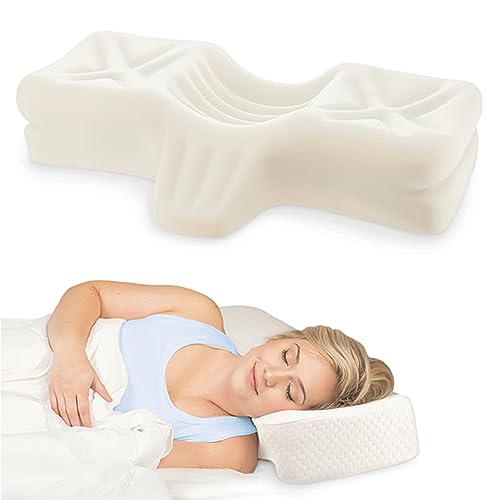
Therapeutica Sleeping Pillow
A chiropractor-designed cervical pillow that cradles the neck and takes pressure off the base of the skull. The pillow we have relied on for over 10 years and the one we recommend first for occipital neuralgia.
Check price on AmazonAs an Amazon Associate we may earn from qualifying purchases, at no extra cost to you.
✔ Pros
- Excellent upper-cervical support
- Versions for back and side sleepers
- Genuinely reduces overnight flare-ups
✖ Cons
- Firm – takes a week or two to adjust
- Premium price
Pillow types for occipital neuralgia, compared
| Pillow type | Upper-cervical support | Holds shape overnight | Suited to occipital neuralgia |
|---|---|---|---|
| Cervical contour (such as the Therapeutica) | Excellent | Yes, firm structure | Top choice for most people |
| Contour memory foam | Good | Mostly holds | Solid budget option |
| Standard memory foam | Moderate | Softens through the night | Only with adjustable loft |
| Down or feather | Poor | No, it flattens | Not recommended |
We have lived with occipital neuralgia for more than 25 years and have tried more pillows than we care to count, the good, the useless, and the actively painful. This guide is the shortcut we wish we had been given: our number-one pillow, four strong alternatives for different needs and budgets, and exactly what to look for so you can judge any pillow for yourself.
Why Occipital Neuralgia Needs a Special Pillow
With occipital neuralgia, the greater and lesser occipital nerves, running from the top of the neck up over the back of the skull, are irritated or compressed, usually by the tight suboccipital muscles they pass through. A standard pillow does two things wrong. First, it often pushes directly against the base of the skull, pressing on the very nerves that are already inflamed. Second, if it fails to support the natural curve of the neck, the cervical spine drifts out of alignment for seven or eight hours, tightening those muscles further. The right pillow solves both problems: it supports the neck and lets the base of the skull rest without pressure. For the wider picture, see our complete guide to occipital neuralgia.
Our #1 Pick: The Therapeutica Sleeping Pillow
After years of trial and error, the Therapeutica Sleeping Pillow is the one we keep coming back to. It was designed by an ergonomic designer working with a chiropractor, and that clinical thinking shows in every contour. Rather than a soft pad you sink into, it’s a structured support that holds your head and neck in an anatomically correct position.
The key feature for occipital neuralgia is its central cavity with a raised cervical ridge. Your head rests into the cavity while the ridge supports the neck, which keeps the base of the skull free of direct pressure, exactly what you want when the occipital nerves are sensitive. It maintains neutral alignment from C1 downward, easing the muscle tension that triggers most flare-ups. When we moved countries, we shipped ours rather than replace it; that is how much it matters to us.
Be warned that it takes one to two weeks to adjust to, it feels firm and unusual at first, and some people notice mild stiffness as the neck learns a new resting position. Push through it; by week two the benefit is usually clear. For our full long-term verdict, see the Therapeutica pillow review.
What to Look For in the Best Pillow for Occipital Neuralgia
Cervical contour
A flat pillow cannot support the cervical curve. Look for a contoured or orthopedic shape with a raised section for the neck and a lower hollow for the head, which keeps C1 and C2, the vertebrae most involved in occipital neuralgia, in neutral alignment.
The right loft (height)
Too low and your head drops back, straining the upper neck; too high and your head is pushed forward, compressing the cervical spine. Side sleepers need more loft than back sleepers to fill the wider gap created by the shoulder. An adjustable pillow removes the guesswork.
Pressure relief and fill
Memory foam, latex and buckwheat all distribute pressure more evenly than cheap polyester fill. For occipital neuralgia you want the weight of the head spread across the whole pillow, never concentrated on the tender base of the skull.
Firmness
Medium-firm is the sweet spot. Soft pillows give no real support; very firm pillows create new pressure points. You want something that holds its shape and keeps the cervical curve without feeling like a brick.
4 More Pillows Worth Considering
1. Osteo Cervical Bed Pillow, best for back sleepers
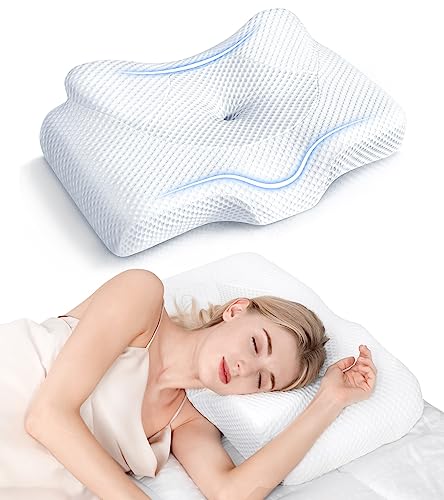
A hollow center takes direct pressure off the back of the skull, which is exactly where occipital neuralgia bites. It’s odorless memory foam with a cooling case, and the height is adjustable, so you are not stuck with one loft.
Check the Osteo Cervical Pillow on AmazonAs an Amazon Associate we may earn from qualifying purchases, at no extra cost to you.
2. Sleep Doctor Approved Cervical Pillow, best for combination sleepers

A contoured memory foam pillow made for side, back and stomach sleepers, which is the point if you change position through the night. The cover is a cooling one.
Check the Sleep Doctor Approved pillow on AmazonAs an Amazon Associate we may earn from qualifying purchases, at no extra cost to you.
3. Osteo Enjoy Pain-Relief Cervical Pillow, best for hot sleepers

Built around temperature. A Q-Max cooling cover, and memory foam the maker says is not temperature affected, so it does not stiffen in a cold room. Worth it if overheating is a second problem on top of the pain.
Check the Osteo Enjoy pillow on AmazonAs an Amazon Associate we may earn from qualifying purchases, at no extra cost to you.
4. No More Aches Neck Pillow, best adjustable option for side sleepers

The butterfly shape and built-in armrest stop your shoulder creeping up toward your ear, which is the usual reason side sleepers wake sore. The height adjusts, so you can get closer to your own shoulder width instead of accepting one fixed loft.
Check the No More Aches pillow on AmazonAs an Amazon Associate we may earn from qualifying purchases, at no extra cost to you.
How Your Sleeping Position Changes Things
Back sleeping is generally best for occipital neuralgia, it keeps the spine neutral and distributes head weight evenly. Side sleeping works if the loft is high enough to keep your head level with your spine; too low and the upper neck strains all night. Stomach sleeping is the worst position and worth breaking if you can. We go deeper in the best way to sleep with occipital neuralgia.
Getting the Most From Your Pillow
A pillow works best as part of a routine. Releasing the suboccipital muscles with a few minutes of massage before bed, and doing daily neck exercises, means you go to sleep with relaxed muscles and the pillow simply maintains that state overnight. Pillow plus routine beats either one alone.
Frequently Asked Questions
Can a pillow really help occipital neuralgia?
It will not cure it, but poor overnight posture is one of the biggest triggers for waking in pain. Removing that trigger consistently reduces the frequency and severity of flare-ups for most people.
How firm should a pillow be for occipital neuralgia?
Medium-firm. Soft pillows offer no cervical support and let the head sink; very firm pillows create pressure points. You want a pillow that holds the cervical curve without feeling rigid.
How long before a new pillow helps?
Most people notice a difference within two to three weeks, allowing for an adjustment period with firm cervical pillows. If there is no improvement at all after four weeks, it’s probably the wrong pillow for you, try another shape or loft.
Memory foam or contour shape for occipital neuralgia?
Ideally both, a cervical contour made from memory foam. The contour provides the targeted neck support; the memory foam spreads pressure away from the tender base of the skull.
The information on this site is based on personal experience and research. It’s not medical advice. Always consult a qualified healthcare professional for diagnosis and treatment.
Ready to try the Therapeutica Sleeping Pillow?
Check the latest price and availability on Amazon.
Check price on AmazonRelated reading
- What is occipital neuralgia
- Best way to sleep with occipital neuralgia
- How to treat occipital neuralgia at home
- Why occipital neuralgia feels worse lying down
The health information in this review is supported by the trusted medical sources below. It’s general information, not a diagnosis or medical advice. See our medical disclaimer.
Sources and further reading
Was this guide helpful?
Thank you. Your feedback helps us improve.