

The best exercises for occipital neuralgia work by releasing the suboccipital muscles that compress the occipital nerves at the base of the skull. We have used this routine every day for more than 10 years. These are not exercises in the gym sense; they are gentle, slow, and deliberate stretches and movements that directly target the muscles most responsible for triggering occipital neuralgia pain.
Because occipital neuralgia is felt as sharp, shooting pain at the back of the head and the base of the skull, every movement below has the same goal: to take pressure off the occipital nerves that cause that back-of-the-head pain. If you have been searching for exercises for pain at the back of the head, these are the ones we rely on.
Important: Do not perform these exercises during a severe flare-up. Wait until the acute pain has subsided. If any movement causes a sharp increase in pain, stop immediately.
How to use these exercises
- Perform them once daily, ideally in the morning and again before bed
- Start gently and never force a movement
- Apply heat or use a massager for 5 to 10 minutes beforehand. This significantly increases effectiveness
- Consistency matters far more than intensity
The 5 best exercises for occipital neuralgia
1. The chin tuck
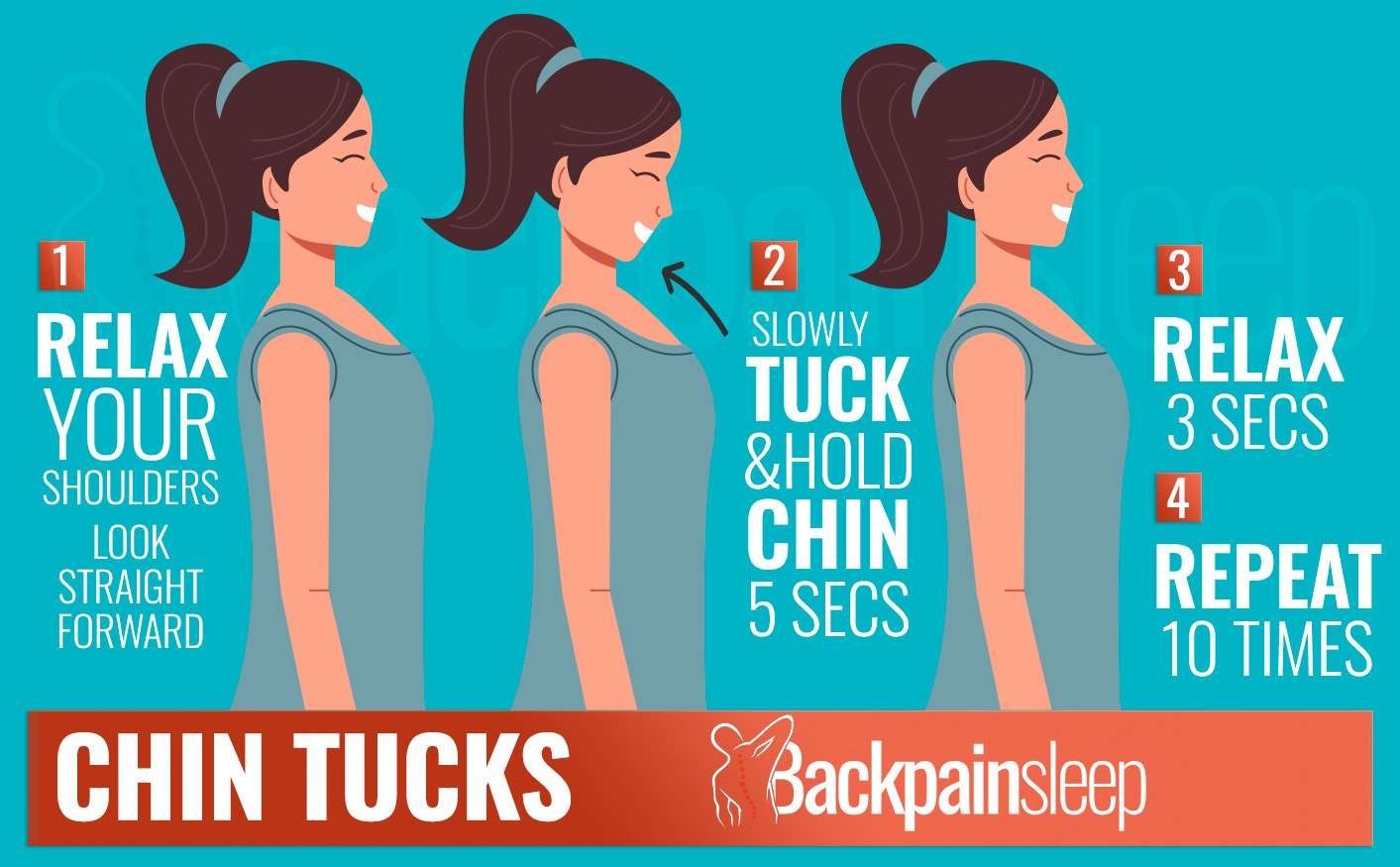
Stand or sit with your back straight. Gently pull your chin back as if making a double chin, without tilting your head up or down. You should feel a stretch at the base of the skull and the top of the neck. Hold for 5 seconds and repeat 10 times. The chin tuck directly targets the suboccipital muscles and the forward head position that compresses the occipital nerves.
2. Neck rotation
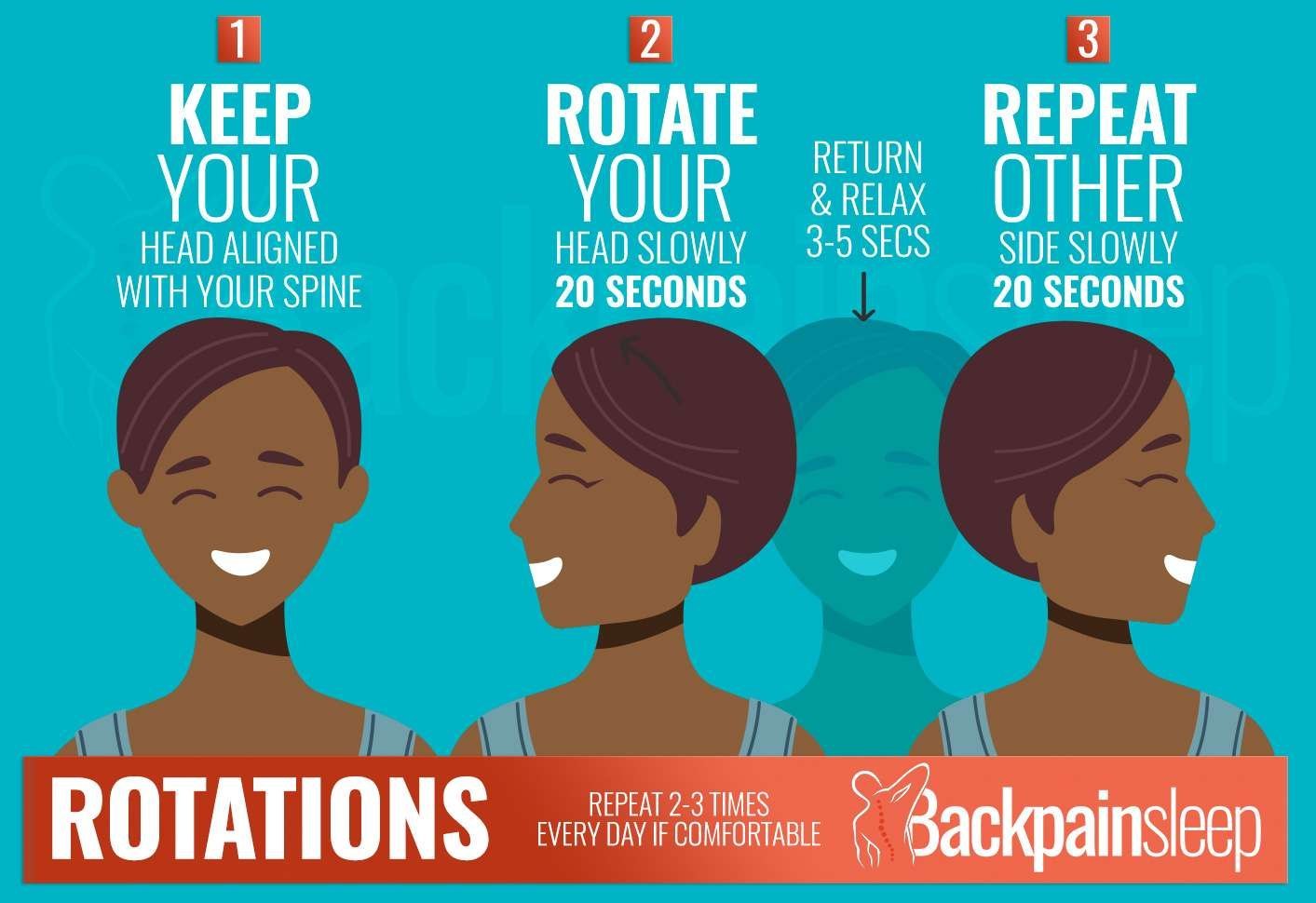
Sitting tall, slowly rotate your head to look over one shoulder as far as comfortable without pain. Hold for 3 to 5 seconds, return to center, then rotate to the other side. Perform 5 repetitions each side. Move slowly and smoothly. If you hear clicking or feel sharp pain, stop and reassess.
3. Lateral neck tilt
Sitting tall, slowly tilt your ear toward your shoulder on one side, keeping the shoulder down. You should feel a stretch on the opposite side of the neck. Hold for 10 to 15 seconds, then switch sides. Perform 3 repetitions each side. This stretches the scalene and upper trapezius muscles that often contribute to occipital nerve compression.
4. Suboccipital release
Lie on your back with a rolled towel placed just below the base of the skull. Allow the weight of your head to apply gentle traction to the suboccipital muscles. Stay in this position for 5 to 10 minutes. This passive exercise is one of the most relaxing and effective things you can do before bed for occipital neuralgia.
5. Side stretch
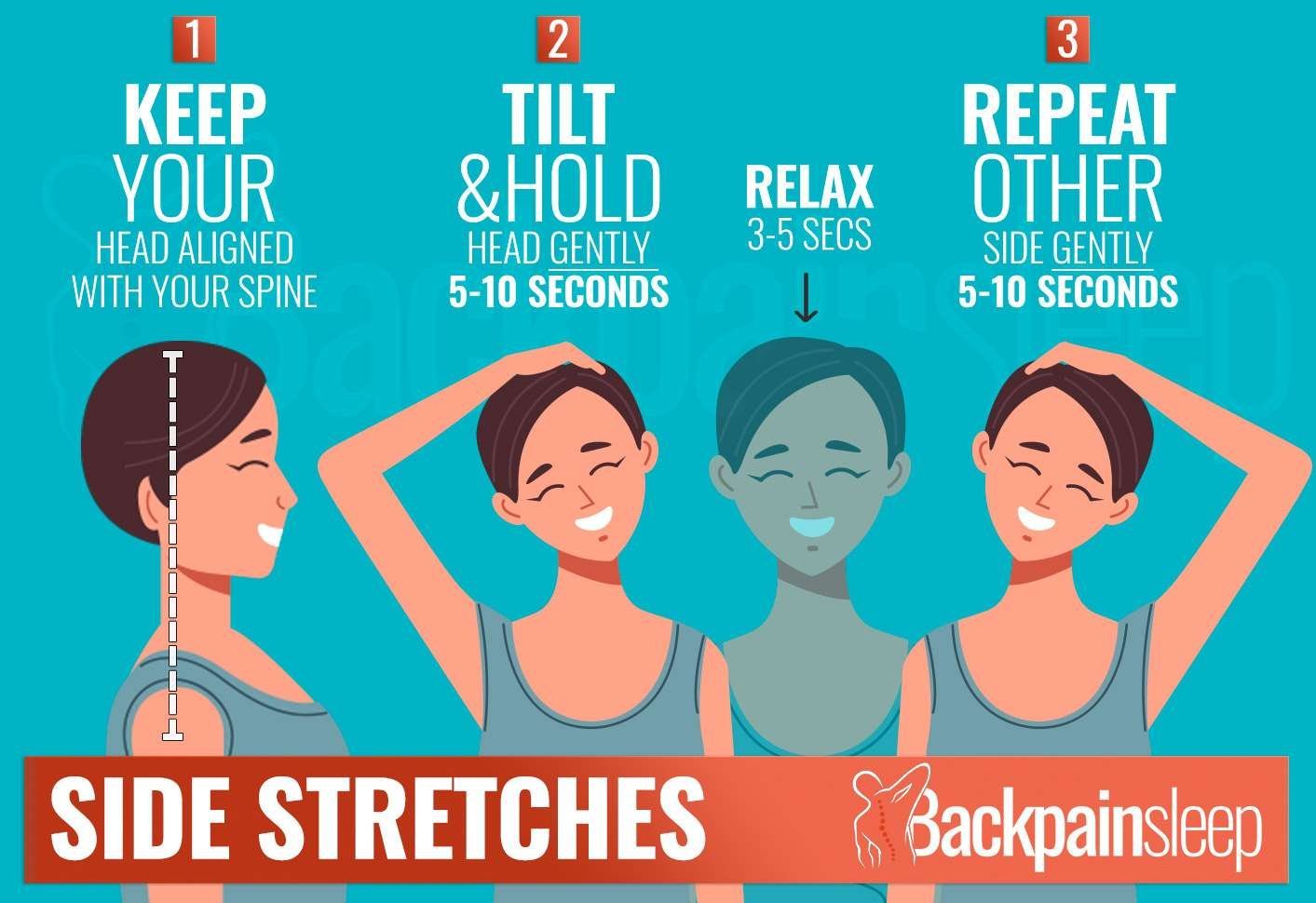
Sitting tall, reach one arm over the head and gently pull the head to one side. Hold for 10 to 15 seconds, then switch. This targets the muscles that run from the skull base to the shoulder, which when tight can increase pressure on the occipital nerves.
Using a massager before exercises
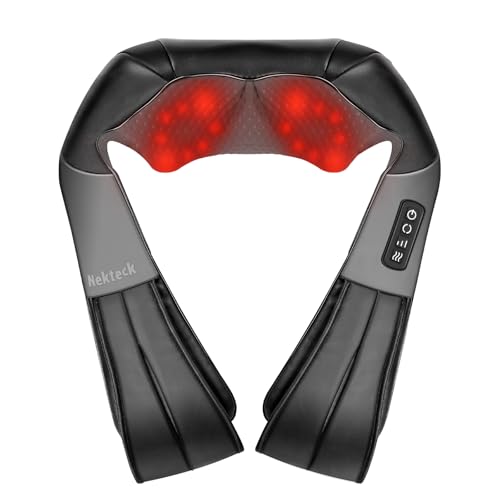
Applying a shiatsu neck massager on the heat setting for 5 to 10 minutes before these exercises significantly improves their effectiveness. The heat and rotating nodes release surface tension before you begin the stretches, allowing a better range of movement and less discomfort. We consider this step non-optional.
 What we use
Nekteck Shiatsu Neck & Shoulder Massager with Heat
The heat setting is the part that matters here. Five to ten minutes before the stretches, as described above.
Check the Nekteck massager on AmazonAs an Amazon Associate we may earn from qualifying purchases, at no extra cost to you.
When to expect results
Most people notice some reduction in tension within the first few sessions. Meaningful, sustained reduction in flare-up frequency typically takes two to four weeks of consistent daily practice. The exercises do not cure occipital neuralgia, but they are one of the most effective tools for managing it at home over the long term.
Frequently Asked Questions
Can exercises make occipital neuralgia worse?
Performed correctly and outside of acute flare-ups, these exercises should not worsen occipital neuralgia. If any movement causes a sharp increase in shooting or electric pain, stop immediately and rest. Return to the exercises once the acute phase has passed.
How often should I do these exercises?
Once daily as a minimum. Twice daily (morning and before bed) produces better results. The before-bed session is particularly valuable for reducing overnight flare-ups.
Should I see a doctor before starting?
If your occipital neuralgia has not been formally diagnosed, or if you have any neurological symptoms such as weakness, significant visual disturbance, or numbness beyond the scalp area, see a doctor before starting any exercise routine.
Which exercises help pain at the back of the head?
Pain at the back of the head from occipital neuralgia responds best to the chin tuck and the suboccipital release, because both directly decompress the nerves at the base of the skull. Start with those two, warm the muscles first, then add the rotations and side stretches as your range of movement improves.
A complete daily exercise routine for occipital neuralgia
Rather than performing these exercises randomly, building them into a consistent routine produces far better results. Here is the sequence we follow every morning and before bed.
- 5 to 10 minutes with the neck massager on heat (this is the most important preparation step)
- 10 chin tucks, holding 5 seconds each
- 5 neck rotations each side, slow and controlled
- 3 lateral tilts each side, holding 15 seconds each
- 5 to 10 minutes of suboccipital release lying with a rolled towel
- 5 side stretches each side, holding 15 seconds each
The total routine takes 20 to 25 minutes. On days when we do not have that time, we at minimum do the chin tucks and the suboccipital release. Even two exercises done consistently outperform five exercises done occasionally.
What to expect in the first few weeks
Week one: muscles that have been tight for years will feel resistance, and some soreness after the first two or three sessions is normal. This is muscular adaptation, not a worsening of the condition. If you experience sharp, shooting pain or an increase in neurological symptoms, stop and rest.
Week two to three: range of movement typically improves and the suboccipital muscles begin to feel less rigid under pressure. Most people notice some reduction in the intensity of individual flare-ups during this period.
Week four onward: sustained daily practice tends to produce meaningful reductions in flare-up frequency. The exercises become quicker and easier as the muscles adapt. At this point the routine becomes maintenance rather than recovery.
The role of your pillow in the exercise program
The most thorough exercise routine cannot fully compensate for a pillow that puts the neck into compression for seven hours every night. We think of these exercises and the right pillow as two sides of the same coin: the exercises address the daytime muscular tension, the pillow addresses the overnight alignment. See our guide to the best pillow for occipital neuralgia for specific recommendations.
Exercises to avoid with occipital neuralgia
- Neck circles: rotating the head in a full circle compresses the facet joints and can irritate the occipital nerves. Stick to controlled rotations within a comfortable range instead.
- Heavy overhead lifting without bracing: loading the cervical spine from above while the neck is unbraced can acutely worsen occipital neuralgia. Reduce loads and focus on form.
- High-impact exercise during a flare-up: running, jumping, or anything that jars the head and neck during an active flare-up consistently makes things worse. Wait until the acute phase settles.
How occipital neuralgia exercises differ from general neck exercises
General neck exercises often focus on strength and range of movement. Exercises for occipital neuralgia specifically target the decompression of the occipital nerves by releasing the suboccipital muscles and improving cervical alignment. Strength training of the neck is generally secondary: the priority is releasing the muscles that are compressing the nerves, not adding more tension.
Is stretching or strengthening more important?
Stretching comes first. For most people with occipital neuralgia, the problem is excessive muscle tension rather than weakness. Strengthening tight muscles without first releasing them can worsen compression. Once daily stretching has established a baseline of mobility, gentle strengthening of the deep cervical flexors (the muscles that hold the head in neutral) adds long-term stability.
This guide combines personal experience of living with occipital neuralgia with guidance from the medical sources below. It’s general information, not a diagnosis or medical advice. See our medical disclaimer.
Sources and further reading
Was this guide helpful?
Thank you. Your feedback helps us improve.