
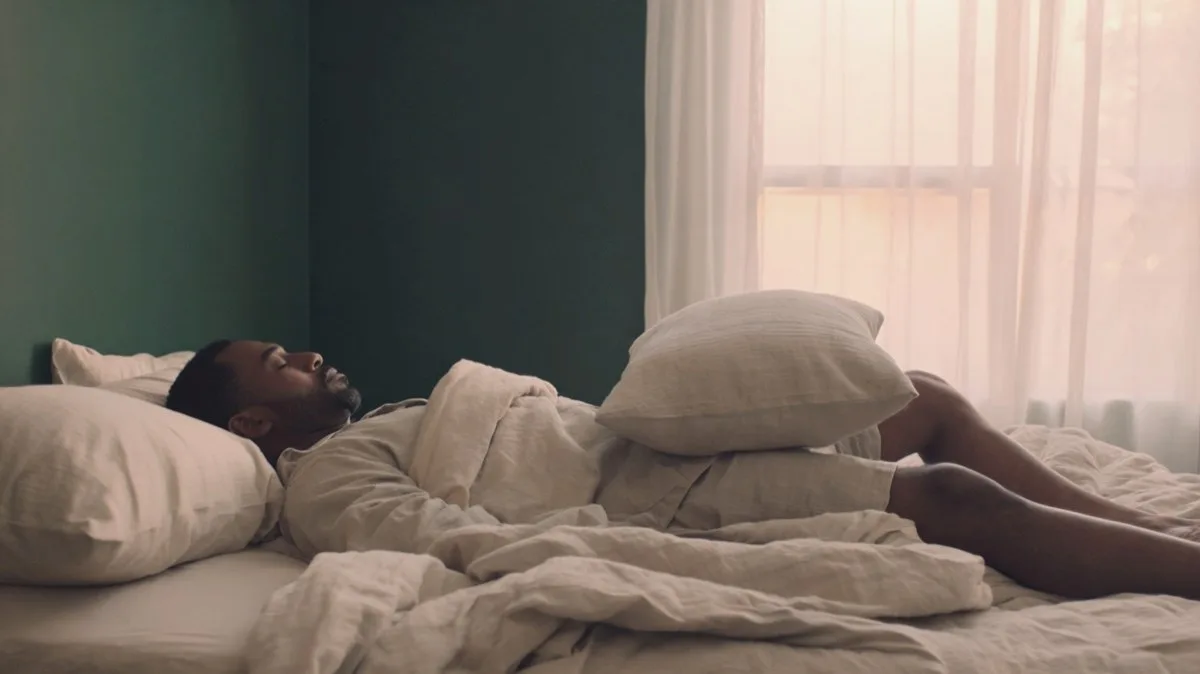
Sleeping with lower back pain and sciatica is one of the most demoralising aspects of these conditions. Quality sleep is essential for tissue repair, pain modulation, and mental health, yet pain and discomfort make it the first thing to suffer. After years of managing both conditions, these are the three setups that work consistently for us.
Setup 1: Side sleeping with pillow between the knees
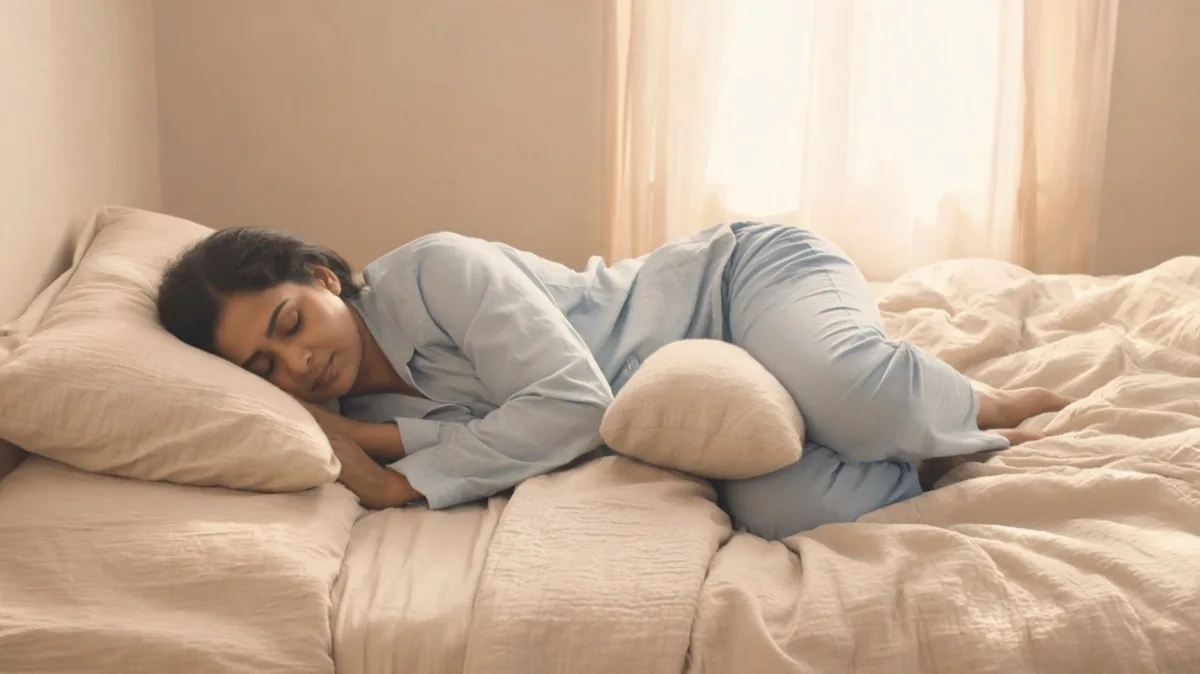
This is the position most recommended for both lower back pain and sciatica, and for good reason. Side sleeping reduces pressure on the lumbar discs compared to back sleeping on a flat surface, and a pillow between the knees keeps the hips, pelvis, and spine in alignment.
- Lie on your side, ideally on the side opposite to your pain if you have one-sided sciatica
- Place a firm pillow between your knees and if possible between your ankles too
- Keep your knees slightly bent rather than drawn tightly to the chest
- If a standard pillow collapses overnight, a knee spacer or small firm cushion holds its shape better
Setup 2: Back sleeping with pillow under the knees
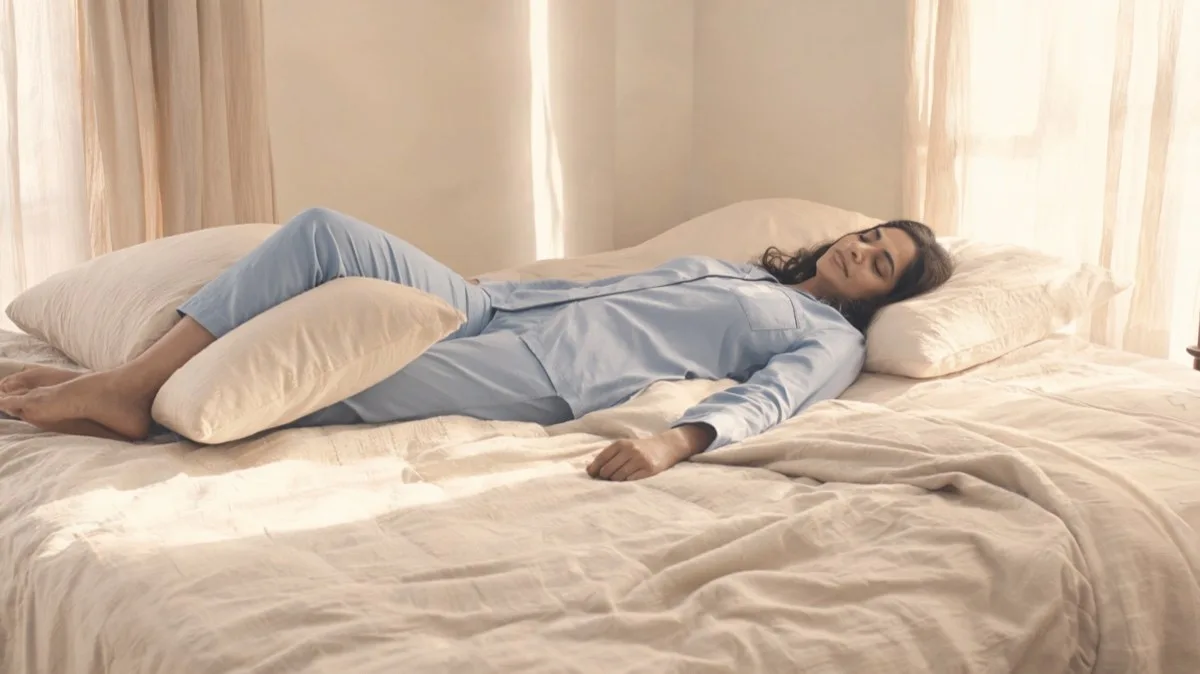
Back sleeping with a pillow or rolled blanket under the knees flattens the exaggerated lumbar curve that increases pressure on the lower back and sciatic nerve. It takes the curve out of the lower spine and reduces the load on the discs. We use this setup on nights when side sleeping is not comfortable.
- Lie on your back
- Place one or two firm pillows under both knees to raise them by about 15 to 20 cm
- Allow the lower back to flatten naturally against the mattress
- Apply the Sciatica Sleep Shuffle if pain persists: shift the hips an inch or two away from the painful side
Setup 3: Foetal position for disc pain
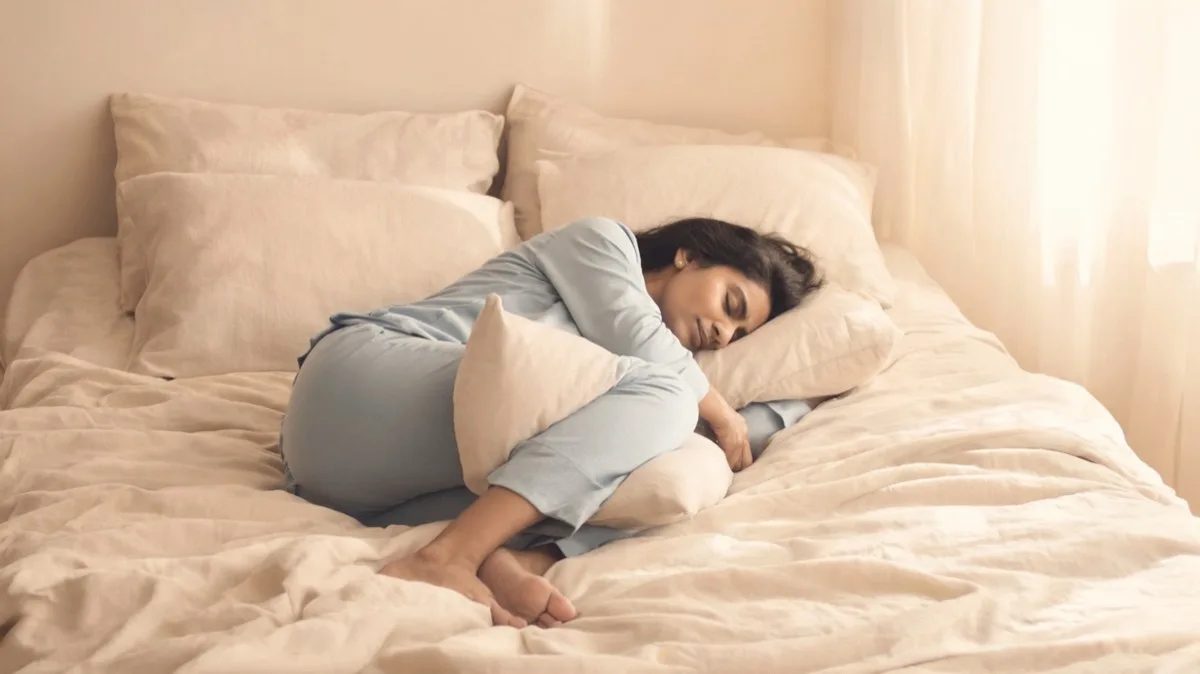
If your lower back pain is driven by a disc bulge or herniation (pain that worsens when you lean back and eases when you curl forward), the foetal position may be more comfortable than a neutral side position.
- Lie on your side and bring both knees towards your chest
- Keep the spine in a relaxed C-curve
- Use a pillow between the knees for comfort
- Try both sides to find the more comfortable one
What to do if you wake up in pain
If sciatica wakes you in the night, the fastest relief is often to get up briefly and perform a simple forward bend or knee-to-chest stretch, then return to bed in the side-lying position. The movement helps shift the disc material off the nerve and resets the muscular spasm that builds during sustained lying.
The mattress and pillow matter
No sleeping position fully compensates for a mattress that lets the spine sag out of alignment. A medium-firm mattress provides the best combination of support and pressure relief for most people with back pain. See our guide to the best mattress for back pain.
ViscoSoft 3 Inch Select High Density Topper
If the mattress is the problem rather than the position, a topper changes the firmness for a fraction of the cost of replacing it.
Check the ViscoSoft topper on AmazonAs an Amazon Associate we may earn from qualifying purchases, at no extra cost to you.
Frequently Asked Questions
What is the worst sleeping position for sciatica?
Sleeping on your stomach is consistently the worst position for sciatica. It puts the lumbar spine into extension and rotates the neck, increasing pressure on the discs and nerve roots. Avoid it if you can.
How do I stop sciatica pain from disrupting my sleep?
Perform our Great Sciatica Sleep Fix routine before bed, use the correct sleeping setup, and apply the Sciatica Sleep Shuffle if pain persists once you are in bed. A supportive mattress completes the approach. See our full guide to the best sleeping positions for sciatica.
Making the transition between positions at night
One of the most underrated aspects of sleeping with sciatica is how you move in bed. Rolling over abruptly can trigger a significant pain spike. The technique that works best for us is the log roll: keep the whole body stiff and move shoulders, hips, and knees as one unit when changing position, rather than twisting at the spine. It takes practice but dramatically reduces the pain of mid-night position changes.
Pillow strategy in detail
The pillow between the knees needs to be firm enough to hold its position through the night. A standard soft pillow collapses and loses effectiveness within an hour or two. A memory foam knee pillow, or a dense firm cushion, maintains the alignment benefit. Some people find a small pillow behind the lower back (when side sleeping) adds additional lumbar support.
The mattress question
No combination of pillows and positions fully compensates for a mattress that lets the lumbar spine sag out of alignment. If your sciatica is consistently worse in the morning than when you went to bed, and if you can feel springs or significant sinking when you lie down, your mattress is contributing. A medium-firm mattress is consistently the most-supported choice for sciatica. See our guide to the best mattress for back pain.
Heat before bed for sciatica
Applying heat to the lower back and buttock for 15 minutes before bed relaxes the paraspinal muscles and the piriformis, both of which can compress the sciatic nerve. This preparation step, combined with The Great Sciatica Sleep Fix, gives you the best chance of settling comfortably. Do not apply heat directly to bare skin and do not fall asleep with a heat pad in use.
Tracking what works
Sciatica has a pattern specific to each person. What aggravates one person may relieve another, depending on whether the compression is from a disc bulge, a bone spur, or a tight piriformis. Keeping a brief note of which positions felt most comfortable each night helps you identify your specific pattern more quickly than trial and error alone.
Should I use a firm or soft mattress for sciatica?
Medium-firm is the consensus recommendation for most people with sciatica. A very firm mattress offers good support but can create pressure points at the hip and shoulder when side sleeping. A very soft mattress allows the spine to sag. Medium-firm provides support with enough give to accommodate the hips and shoulders.
Is it better to sleep with sciatica or stay awake?
Sleep is essential for tissue repair and pain regulation. Sleep deprivation worsens pain perception significantly. Getting adequate sleep, even with some discomfort, is better than avoiding sleep. Use the positioning strategies and pre-bed routine to make sleep as comfortable as possible rather than waiting for pain to completely resolve before attempting to sleep.
When to seek medical help
See a doctor if sciatica or back pain does not improve after a few weeks or keeps worsening. Seek urgent care (call 911 or go to your nearest emergency room) for numbness around the genitals or buttocks, trouble urinating, or loss of bladder or bowel control.
This guide combines personal experience of living with sciatica and back pain with guidance from the medical sources below. It is general information, not a diagnosis or medical advice. See our medical disclaimer.
Sources and further reading
Was this guide helpful?
Thank you. Your feedback helps us improve.